
Home / Locations / Miami, Florida
Your business. Your next chapter.
Business Broker in
Miami, Florida
Make your company's trading relationships clear before going to market
A business broker in Miami should help you explain the customers, suppliers and operating responsibilities behind your company's earnings. Your business may serve one neighborhood, sell across South Florida or work with buyers and suppliers in other countries. Each pattern needs its own evidence. Bridge Point Advisors can help organize that operating account alongside your financial records and ownership goals. Miami's commercial districts and the wider county's trade infrastructure provide useful context, while your company's actual transactions establish its market. Begin with what the business buys and sells, where those relationships are based and what a purchaser would need to continue the operation — without treating an MIA cargo caption, a Wynwood directory listing, or a downtown research report as private run rate, and without a claimed Miami street office.
Or call (352) 515-0226
Miami-Dade County — MIA cargo / Wynwood / Downtown Miami
Bridge Point Advisors for Miami owners
Bridge Point Advisors helps Miami and Miami-Dade owners present wholesale and trade-related businesses, perishable or specialized supply, Wynwood design and creative retail, restaurants and hospitality, and downtown professional services clearly — including Miami Beach, Doral, Hialeah, Coral Gables, Homestead, or North Miami when the invoices already name those doors — without treating airport freight activity, a neighborhood directory, or a Fort Lauderdale multiple as a substitute for the company's own files. Call (352) 515-0226. No street address is claimed for Bridge Point in Miami.
Bridge Point Advisors
Miami, FL and surrounding areas. We work nationally from Spring Hill and do not list a fake Miami street office or unverifiable local hours.
Local market perspective
Use current trade and district evidence with its dates intact
The airport's current facts page lists Air China Cargo's Shanghai connection among additions in March 2026.[4] That is a specific network development at MIA. It does not show that a particular Miami business uses the service or that its freight costs, delivery times or sales changed as a result.
For an owner, the practical question is how the company's own sourcing and customer arrangements developed. Identify actual changes in suppliers, routes, outside services or product availability. Explain the dates, costs and records supporting any material effect. A purchaser should be able to distinguish the general infrastructure setting from the operation's own trading history.
District research also needs clear timing. The DDA's research page identifies a 2024–2025 annual report published in January 2026 and office and residential analyses from November 2025.[3] Those are dated materials, rather than live measures of an individual company's present results. Nearby published pages we also serve: Fort Lauderdale, West Palm Beach, Key West, Naples, Tampa, and Spring Hill. Each file stays on its own customer records — without a claimed Miami street office.
A clearer story for a prospective buyer
Miami, FL and surrounding areas
The ownership transition
Hand over trading relationships and live shipments together
Soft process steps — transfer supplier links and goods in transit; no invented close counts.
Understand the business
Identify who orders goods, communicates with suppliers, checks incoming products and coordinates fulfillment. Show the records and systems supporting those steps, including how staff handle exceptions.
Prepare the presentation
Organize representative transactions that connect purchasing, fulfillment and receipt of payment. Include agreements and cost records available for review. Identify foreign-currency transactions where they occur.
Confidential marketing
Stage outreach so a distinctive supplier term or recognizable commercial relationship is not named on day one. Share detailed records through an [NDA](/nda).
Due diligence
Review supplier, storage, sales-channel and systems agreements with appropriate advisers. A familiar trading relationship does not answer every ownership-change question.
Closing and transition
Prepare the current position near closing: goods in transit, accepted customer orders, unresolved returns and amounts due to or from trading partners. Define seller support with clear subjects, availability and an endpoint.
Use the sale-prep roadmap and due diligence guides. M&A advisory fits when the company and buyer require that level of engagement.

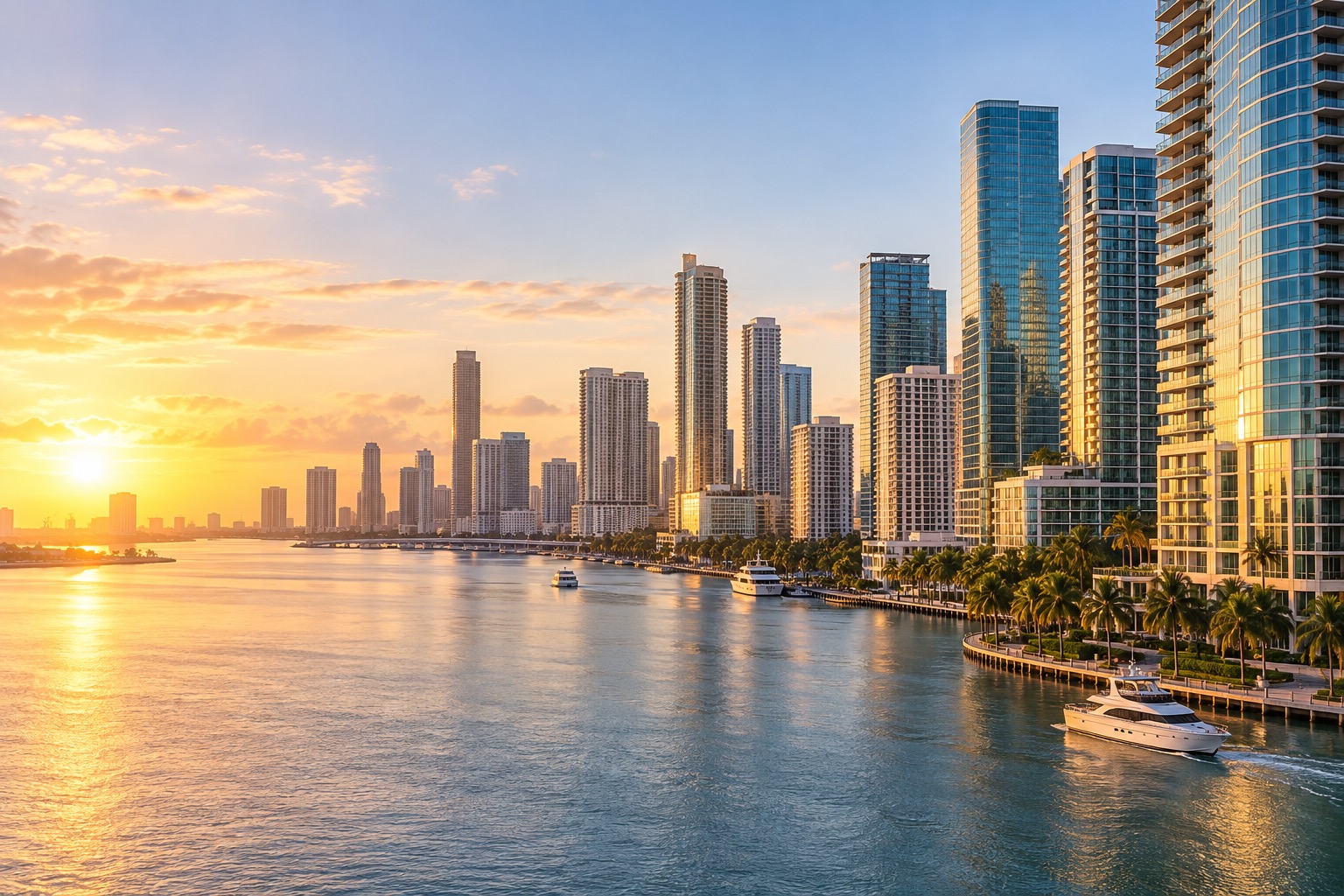
AI-generated editorial illustration. Not a photograph of an actual local business.
The market behind your business
Miami has several business markets within a wider trade gateway
Miami International Airport's cargo development page reports that international freight represented most of its 2025 freight activity and identifies commodities including perishables, pharmaceuticals, electronics and other goods.[1] This is airport infrastructure and activity within Miami-Dade County. It is not a citywide measure of private business revenue or a customer list for an individual Miami seller.
Wynwood provides a different commercial picture. The Business Improvement District's directory includes galleries, fashion, home design, restaurants, hospitality, professional services and other neighborhood businesses.[2] Its offerings illustrate why a local shop or service company needs a precise account of its own premises, customers and product mix.
Downtown has its own evidence base. Miami's Downtown Development Authority publishes distinct residential, office and retail research, including a Flagler District retail strategy.[3] Those district-specific materials should remain separate from the entire city or county market and from the company's financial performance.
If you plan to sell a business in Miami, identify where the operation actually fits. Explain the premises and customer territory, including any places used for storage, production or administration. Soften sale talk — no fake Miami sold-deal tallies, invented testimonials, or an unverifiable Miami street office. Compare with Fort Lauderdale, West Palm Beach, Key West, Naples, and Tampa only on each company's own files — not one South Florida multiple. Miami Beach, Doral, Hialeah, Coral Gables, Homestead, and North Miami fold here when the invoices already name those doors; keep Miami city premises distinct from those municipalities.
A different sale story for every company
Key industries in Miami
What owners should prepare before taking a business to market — qualitative preparation, not hard deal tallies.
Wholesale, distribution and trade-related businesses
The airport's cargo description establishes a wider Miami-Dade setting for the movement of many kinds of goods.[1] Define the company's actual role — inventory ownership, arranged service or supply to another business. Explain purchasing, storage, fulfillment and customer terms. Infrastructure access provides context; orders and financial records establish the company. See warehouse and trucking.
Perishable products and specialized supply
MIA's cargo material identifies perishables and pharmaceuticals among goods moving through the airport.[1] Explain the particular products handled, storage, equipment, outside services and tracking records. Show how spoilage, returns or other material adjustments appear when applicable. The general commodity setting does not establish that a private business handles any particular product. See warehouse and pharmacy.
Wynwood design, fashion and creative retail
The Wynwood directory includes home-design, fashion and other retail categories.[2] Explain assortment, sourcing and customer work; identify purchased stock, special orders and any design or preparation services. Neighborhood identity provides location context; transactions establish how much activity comes from residents, visitors, commercial buyers or online customers where those distinctions are supported. See retail and gift shops.
Restaurants, hospitality and neighborhood experiences
Wynwood's published mix includes restaurants, event spaces and hospitality businesses.[2] Describe your own service format and customer pattern. Explain ordinary trading alongside separately arranged events where material. If visitor or event periods affect results, show the actual evidence and dates. Neighborhood activity explains the setting; company records establish sales. See restaurants and hotels.
Downtown office and professional services
The Downtown Development Authority publishes separate office-market research and materials about downtown's residential and retail setting.[3] Identify actual customers, work and premises. Explain whether staff serve clients in the office, remotely or at customer locations. Downtown research provides district context; customer records and financial statements establish the operation. See accounting and consulting.
Valuation & exit prep
Soften valuation talk to earnings after sourcing, transport, storage and owner coordination — not an MIA freight caption or Wynwood directory entry as private profit. See business valuations and exit planning.
Local context. Practical implications.
Connect supplier location to the goods and costs in your records
A company's customers and suppliers may occupy different geographies. A business might buy goods through a local distributor, import them directly or provide services without handling goods at all. Explain the actual arrangement rather than leave the buyer to infer it from an industry label.
For a trading company, trace representative purchases from the supplier's order through receipt and sale. Identify the parties involved, the records used and the costs the business actually incurs. Transport, handling, storage and outside services may appear at different stages. Appropriate advisers can help reconcile the presentation with the accounting and transaction documents.
Consider a hypothetical Miami homeware wholesaler buying products from several suppliers and selling to regional retailers. Two similar items may have different sourcing and delivery arrangements. A purchaser needs to investigate actual costs, payment timing and stock responsibilities. The product's shelf price or supplier quotation alone cannot establish the company's margin.
Explain the owner's coordination work. That may include choosing suppliers, checking product specifications, managing communications or resolving a delayed order. Where languages or time zones affect actual responsibilities, describe the skills and staff support involved without assuming every Miami business operates internationally. A clear operating account gives buyers a practical way to investigate the relationships behind earnings — without Proven Track Record slogans or a cargo headline standing in for private earnings.

AI-generated editorial illustration. Not a photograph of an actual local business.
Before you go to market
Prepare a supplier and customer geography record
Before you sell your business in Miami, identify the relationships that materially support the operation. Show customer and supplier locations at a useful level of detail, preserving appropriate confidentiality. Explain where goods or services move and the premises or outside providers involved.
Organize representative transactions that connect purchasing, fulfillment and receipt of payment. Include the agreements and cost records available for review. If foreign-currency transactions occur, identify them and explain the accounting presentation with appropriate advice. Do not assume the company's public identity tells a buyer how the money or goods move.
Prepare inventory and goods-in-transit information where relevant. Identify ownership, status and any customer commitments associated with the goods. Describe the owner's role in maintaining the relationships — language skills, technical knowledge and staff responsibilities where they are actually needed. Prepare that picture before marketing begins.
Providing local expertise
Nearby markets we also serve
Fort Lauderdale, Florida
Broward peer — separate lease and license story.
West Palm Beach, Florida
Palm Beach County north — not a quieter Miami annex.
Key West, Florida
Monroe island desk — mainland Miami is the wrong first slide.
Naples, Florida
Collier design and home-watch corridor.
Tampa, Florida
West Coast port and Midtown file — different bay, different books.
Fort Myers, Florida
Southwest Florida — Gulf-shore ADR is not this trade gateway.
Spring Hill, Florida
Firm base — national process, not a substitute Miami multiple.

Discuss your Miami company's next ownership chapter
Bring your ownership goals, financial records and a description of the company's customers and suppliers to an initial consultation. Contact Bridge Point Advisors to discuss selling your business in Miami, Florida — call (352) 515-0226 or contact us.
Or call (352) 515-0226
Questions from local owners
Frequently asked questions
About selling a business in Miami, Florida
Should I describe overseas suppliers if most customers are local?
Yes, where those relationships materially support the offering. Explain actual sourcing, costs, timing and responsibilities with supporting records. A purchaser needs to understand how the business serves its customers, including resources and agreements outside the customer market.
How should I present goods that are still in transit?
Identify their status, ownership, supplier terms and customer commitments where relevant. Connect the goods to payment and accounting records with appropriate advice. The parties and advisers need to investigate the actual position and agree treatment in the proposed transaction arrangements.
Can I use airport cargo statistics to support my sale presentation?
Use accurately dated airport information as Miami-Dade infrastructure context. Your company's own transactions and agreements establish its trading relationships and earnings. A purchaser should be able to distinguish general cargo activity from goods, customers and costs belonging to the business being offered.
Is Wynwood research enough for a business elsewhere in Miami?
Identify the actual district, premises and customer pattern of your company. Wynwood directory information describes that neighborhood's offering. A buyer needs the business's own location and operating evidence rather than an assumption that every Miami district serves the same market.
How is a Miami business priced, and can an SBA loan cover the check?
Owner-operated companies are often priced on seller's discretionary earnings after a real manager wage; managed companies often use adjusted EBITDA. Those ranges are not a quote. An SBA 7(a) loan commonly caps at $5 million, so a forecast built on unsigned cargo demand or a single beach week usually needs more equity. This is not lending advice.
How should a buyer compare Miami with Fort Lauderdale or Key West?
Fort Lauderdale is Broward County with its own lease and license story. Key West is a Monroe island desk. Miami is Miami-Dade, with MIA cargo context, Wynwood and downtown districts that still have to be proved on company records. A shared South Florida label does not move another city's multiple onto this rent. Use each location page when that is the right map.
Does Bridge Point Advisors have a street office in Miami?
No street address is claimed for Bridge Point in Miami. Bridge Point Advisors is a national firm working from Spring Hill, Florida, and takes Miami files to industry-first buyers. Start at contact or call (352) 515-0226.

Ready to discuss selling your business in Miami?
Start with your goals, your recent results, and the trading story your records can support. Bridge Point Advisors — call (352) 515-0226. No street address is claimed for Bridge Point in Miami. Or contact us online.
Or call (352) 515-0226
Local research and sources
[1] Miami International Airport, Cargo Service Development; dated 2025 airport freight profile and commodity context, county infrastructure rather than city/private earnings. Rankings and aggregate volume not used for seller claims; accessed October 24, 2026. Source
[2] Wynwood Business Improvement District, official business directory; neighborhood design, fashion, art, food, hospitality and services categories, not all-Miami or county activity, no private results inferred; accessed October 24, 2026. Source
[3] Miami Downtown Development Authority, Research and Reports; district-specific office/residential/Flagler retail materials, 2024–2025 annual report publication January 2026 and November 2025 analyses. No private performance or live 2026 metrics inferred; accessed October 24, 2026. Source
[4] Miami International Airport, About/Facts; Air China Cargo Shanghai addition listed March 2026, specific network context without asserting private-company use or cost effect; accessed October 24, 2026. Source