
Home / Locations / Fairfield, Iowa
Your business. Your next chapter.
Business Broker in
Fairfield, Iowa
Explain the market your Fairfield company actually serves
A business broker in Fairfield should help distinguish where your company is based from where its customers are. Some businesses depend on local appointments and storefront visits. Others produce goods, provide specialized services or sell online to customers far beyond Jefferson County. Fairfield's combination of manufacturing, entrepreneurship, arts and university activity makes that distinction especially useful. Your sale presentation should show how the company reaches customers, fulfills its promises and earns income. A buyer needs a clear view of the actual operation, including the people and systems that allow it to continue when the founder or longtime owner steps away.
Or call (352) 515-0226
Jefferson County — manufacturing / arts & MIU dining / Highway 34 Industrial Park
Bridge Point Advisors for Fairfield owners
Bridge Point Advisors helps Fairfield and Jefferson County owners present manufacturing and specialized production, online retail and product businesses, arts, design and creative services, food and hospitality, and professional or local service desks clearly — including Libertyville, Packwood, Batavia, or Pleasant Plain when the invoices already name those desks — without treating a Dexter or Agri-Industrial caption, a Visit Fairfield arts directory slide, a Maharishi International University dining guide, a TrafFix groundbreaking, or a Fairfield, Idaho / Fairfield, Illinois / Fairfield, Texas namesake packet as a substitute for the company's own files. Call (352) 515-0226. No street address is claimed for Bridge Point in Fairfield. This page is Fairfield, Iowa — Jefferson County — not a Camas Prairie, Wayne County, or Freestone County listing.
Bridge Point Advisors
Fairfield, IA and surrounding areas. We work nationally from Spring Hill and do not list a fake Fairfield street office or unverifiable local hours.

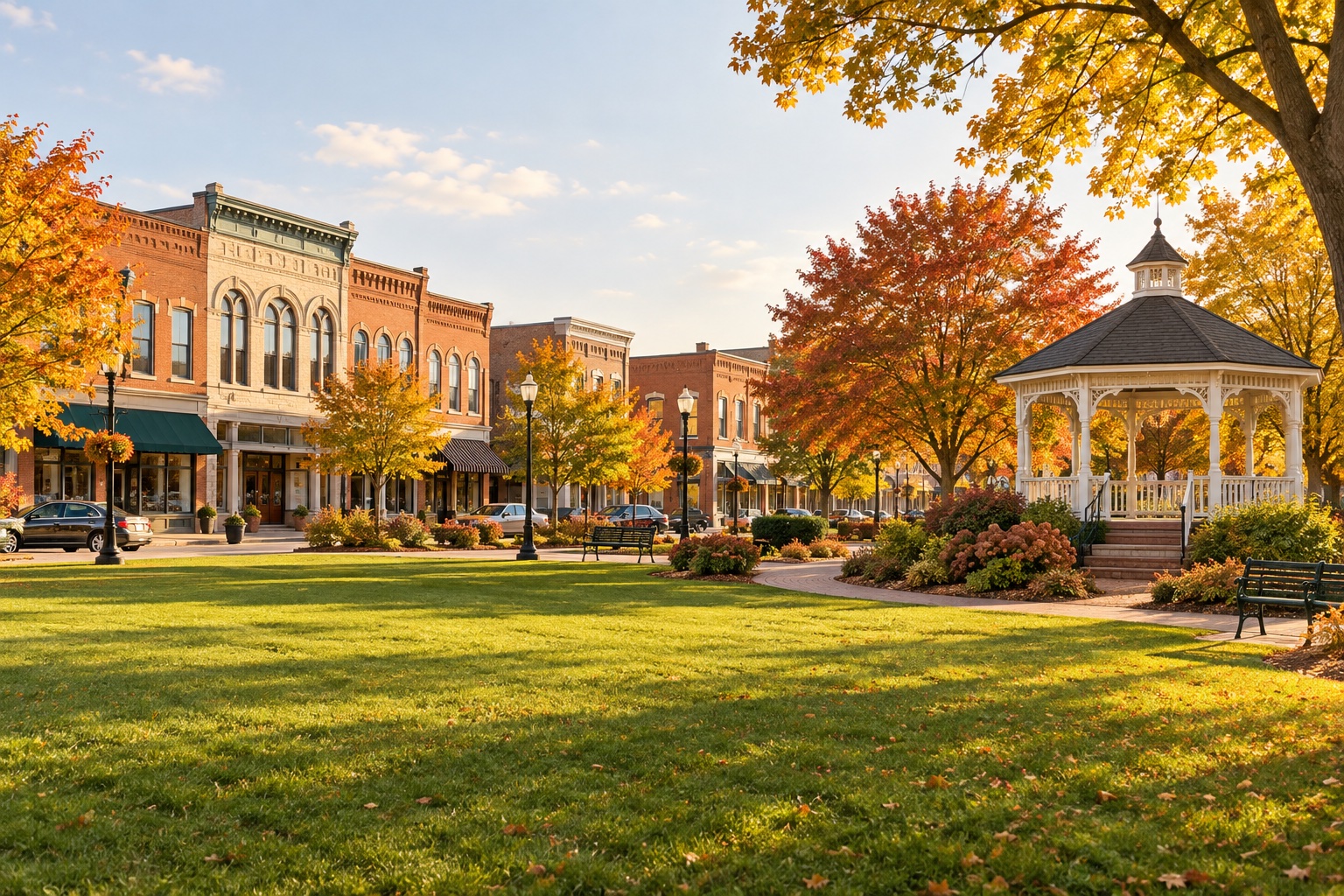
AI-generated editorial illustration. Not a photograph of an actual local business.
The market behind your business
Manufacturing is a concrete part of Fairfield's business identity
Dexter Laundry identifies Fairfield as its longstanding home and the location of its United States manufacturing facility. Agri-Industrial Plastics describes its Fairfield operation producing industrial blow-molded parts, including non-automotive fuel tanks. These are specific examples of businesses whose products reach markets beyond the town.[1][2]
Their presence helps explain Fairfield's production setting, but it does not establish a commercial relationship for every local supplier. An independent company should identify its own customers, work categories and order history rather than treating nearby manufacturers as automatically available accounts.
To sell a business in Fairfield, explain the geography of demand. If most orders arrive from outside the area, show how they are won, processed and delivered. If the business is primarily local, explain the reasons customers choose it and the territory it actually serves.
The distinction also affects what a successor must maintain. A national product business may depend on fulfillment, technical support and customer acquisition. A local repair company may depend on response, scheduling and relationships. A buyer should not have to infer the operating model from the company's address. Soften sale talk to supported evidence — not Proven Results slogans, certified-broker absolutism, or an unverifiable Fairfield street office. Compare with Ottumwa, Iowa City, Bloomfield, Burlington, and Des Moines only on each company's own files — and keep Fairfield, Idaho and Fairfield, Illinois on their own clerks.
Before you go to market
Show how an order becomes a satisfied customer
Before you sell your business in Fairfield, trace several representative transactions from beginning to end. Include a routine order, an unusual request and a situation that required a correction. These examples reveal how the company actually operates more clearly than a general statement about quality or customer care.
A product company shipping nationally might begin with an online inquiry. Explain how the customer chooses the right item, how stock is confirmed, how shipping is arranged and what happens if the product is returned. A creative studio may have a different sequence: consultation, proposal, approval, production and delivery. Identify where the owner supplies judgment and where the team follows an established method.
Connect those examples to financial records. Reconcile revenue by meaningful channel or work type. Review direct costs, overhead, payments received in advance and amounts still due. Document open orders and future obligations. A company with customers beyond Fairfield may have commitments that are not visible during a site visit. Prepare that picture before marketing begins. Soften claims to supported evidence — not Maximum Value absolutism or fake Experience tallies.
Local context. Practical implications.
Arts, dining and university life create a different commercial setting
Visit Fairfield's arts directory identifies galleries, live-performance venues and the Fairfield Arts and Convention Center. Maharishi International University's dining information provides a current local restaurant guide with several cuisines and types of food service. These sources describe a distinctive cultural and dining environment, not a spending forecast for any individual business.[3][4]
For a seller in retail, hospitality or creative services, the useful question is which audiences actually matter. A company may serve residents, visitors, university-connected customers or clients who encounter it online. Those groups can overlap, and the records may not identify every customer's reason for purchasing.
Explain what is known and keep estimates separate. A business should not label all unfamiliar customers as tourists or assume that every event produces additional sales. Use transactions, bookings and customer information where available to show the pattern that supports the company.
The offer itself deserves attention. A distinctive menu, product range or creative service may depend on sourcing knowledge, specialist staff and a recognizable approach. Buyers need to understand those requirements as well as the appeal. A broad description of Fairfield's creativity does not explain how a particular business maintains quality or earns a margin. Ottumwa keeps a different plant story. Iowa City keeps a UI / Ped Mall campus file. Bloomfield keeps a Davis County square. Mount Pleasant and Washington are different southeast-Iowa underwriting conversations — not this Jefferson County rent.

AI-generated editorial illustration. Not a photograph of an actual local business.
A different sale story for every company
Key industries in Fairfield
What owners should prepare before taking a business to market — qualitative preparation, not hard deal tallies.
Manufacturing and specialized production
Describe products, customer requirements and the processes used to deliver them. Identify equipment, tooling, quality checks and staff expertise. Buyers should understand the distinction between repeat production and custom work. Explain who handles specifications, approvals and problems. A broad geographic market can be attractive, but it may also require more coordination and support. The sale story should show the capability that belongs to the company rather than assuming every element of the owner's technical knowledge transfers automatically. See manufacturing and construction.
Online retail and product businesses
Separate sales channels and explain their economics. Show fulfillment, returns, customer service and the role of advertising or repeat purchases. Identify who owns and controls the business's digital assets and accounts, with transfer requirements reviewed appropriately. Buyers need to understand whether orders depend on a durable customer base, a particular platform or the owner's personal following. Inventory quality and supplier access matter alongside revenue, especially when products are sold beyond the local storefront. See retail and ecommerce stores.
Arts, design and creative services
Explain how work is commissioned, priced and completed. Distinguish the company's brand and processes from an individual artist's personal contribution. Identify ownership and permitted use of relevant materials for appropriate review. Buyers should see the practical path from inquiry to delivery, including approvals and revisions. A distinctive local arts setting can provide context, but the business's own client relationships and ability to fulfill future work establish what a successor is evaluating. See marketing agencies and consulting.
Food and hospitality
Show ordinary trading, advance orders and event-related activity separately where meaningful. Explain sourcing, preparation, staffing and the consistency customers expect. A varied food scene can attract interest, but a buyer needs the individual operation's performance. Review equipment, premises and future commitments. Identify the owner's role in recipes, purchasing or customer relationships. The presentation should explain how quality is maintained through busy periods and how the business operates when demand is less concentrated. See restaurants, coffee shops, and hotels.
Professional and local service companies
Describe recurring accounts, appointment patterns and the work performed for each customer group. Explain who manages relationships and who delivers the service. If clients are outside Fairfield, identify the communication and delivery systems that support them. Buyers should understand concentration and the owner's responsibilities before assuming revenue will continue unchanged. A clear account of staff capability, records and follow-up makes the transition more practical and helps separate company strengths from personal dependencies. See accounting firms, HVAC, construction, and staffing agencies.
Valuation & exit prep
Connect supported earnings with channel mix, capability and continuity — not a Dexter caption, a MIU dining-guide slide, or a TrafFix groundbreaking alone. Soften valuation talk to company evidence. See business valuations and exit planning.
The ownership transition
Transfer the systems that connect Fairfield to your customers
Soft process steps — transfer how the company fulfills work, not invented close counts.
Understand the business
A Fairfield handover should reflect the actual route from the business to its market. Demonstrate ordering, scheduling, production, fulfillment and follow-up as applicable. Show the successor where information is stored and how exceptions are resolved.
Prepare the presentation
For a company selling beyond the area, review communication routines and outstanding commitments with particular care. Customers may never visit the premises, yet they still expect reliable service during the transition. For a local business, explain the practical habits that support familiar relationships and repeat purchases.
Plan the transition
Agree the seller's assistance, update open balances near closing and clarify responsibility for unfinished work. Introductions should explain how future requests will be handled. A defined transfer of systems and knowledge gives the buyer a useful start while allowing the seller to step back without leaving customers uncertain about whom to contact or what will happen next.
Use the sale-prep roadmap and due diligence guides. M&A advisory fits when the company and buyer require that level of engagement.
Local market perspective
Current industrial investment and development priorities need careful interpretation
In August 2026, Grow Fairfield reported that TrafFix Devices had broken ground on a sixty-thousand-square-foot facility expansion in response to demand for its traffic-safety products. That is a specific announced construction milestone. It should not be presented as a completed expansion or as guaranteed work for another business.[5]
Grow Fairfield's 2025–2030 priorities also emphasize housing, business retention and expansion, talent and development around the Highway 34 Industrial Park. These are organizational goals and areas of activity, not evidence that every target has already been achieved.[6]
For a seller, the practical question is whether any of those developments connects to the company's own results or requirements. An actual new account should be documented. A possible future customer should be described as a prospect. A general workforce initiative should remain separate from the business's current staffing.
Before you sell your business in Fairfield, Bridge Point Advisors also serves Ottumwa, Iowa City, Bloomfield, Burlington, Des Moines, Albia, Centerville, Mount Pleasant, Oskaloosa, Washington, Keokuk, Fairfield, Idaho, Fairfield, Illinois, and Fairfield, Texas — each underwritten on its own records, without a claimed Fairfield street office. Libertyville, Packwood, Batavia, and Pleasant Plain fold into this page when the book already invoices them.
A clearer story for a prospective buyer
Fairfield, IA and surrounding areas
Providing local expertise
Nearby markets we also serve
Ottumwa, Iowa
Wapello plant / Highway 34 peer — different leftover book.
Iowa City, Iowa
UI / Ped Mall campus — not this Jefferson County desk.
Bloomfield, Iowa
Davis County square — nearby labor, own clerk.
Burlington, Iowa
Mississippi river desk — Snake Alley is not this product.
Des Moines, Iowa
Capitol / insurer stack — not a Maharishi overlay.
Albia, Iowa
Monroe County seat — compare only on company files.
Centerville, Iowa
Appanoose square — southern Iowa, different packet.
Mount Pleasant, Iowa
Henry County — southeast peer, own underwriting.
Oskaloosa, Iowa
Mahaska County — Highway 23 labor leak stays separate.
Washington, Iowa
Washington County seat — company files only.
Keokuk, Iowa
Lee County river desk — not Jefferson County rent.
Fairfield, Idaho
Camas Prairie / US-20 — shared name, different book.
Fairfield, Illinois
Wayne County seat — not Maharishi or Dexter context.
Fairfield, Texas
Freestone / I-45 — oil-patch namesake, own clerk.
Spring Hill, Florida
Bridge Point home base — national firm, not Iowa-only.

Bring your Fairfield business into focus for a successor
Business brokerage in Fairfield should help explain the company you have built, including the market it serves and the capabilities that make it work. Bring recent results, customer patterns and the systems you want a buyer to understand. A confidential consultation can help organize those details around your goals. Contact Bridge Point Advisors — call (352) 515-0226 or contact us.
Or call (352) 515-0226
Questions from local owners
Frequently asked questions
About selling a business in Fairfield, Iowa
What if most of our customers are outside Iowa?
Make that geography clear and explain how the business reaches and serves them. A business broker in Fairfield can help present the company's local operating base separately from its wider market. Buyers need to understand fulfillment, communication, concentration and the systems supporting those relationships rather than assuming the customer base is mainly local.
How should online sales be separated from storefront sales?
Use categories that match the records and explain shared costs where relevant. Include returns, fulfillment, customer service and acquisition expenses. A combined total may hide important differences. Buyers should see how each channel contributes and what resources are needed to maintain the overall business.
Can a creative business be sold if the founder shapes its identity?
The founder's role needs an honest explanation. Identify the work, relationships and judgment that depend on that person, along with the systems and staff that support the company. The transition discussion can then address training, continued assistance or capabilities a successor would need, rather than assuming identity transfers automatically.
Should a nearby manufacturer's expansion be part of our marketing?
It can be relevant context, but distinguish an announced project from completed work and an actual account from a possible opportunity. Use the seller's own records to establish any commercial connection. A buyer should not be asked to treat general local investment — including a TrafFix groundbreaking or Highway 34 Industrial Park priority — as revenue already belonging to the company.
Is Fairfield, Iowa priced like Fairfield, Idaho; Fairfield, Illinois; Iowa City; or Ottumwa?
No. This page is Jefferson County manufacturing, arts–dining–MIU setting, and industrial-park investment context kept separate from company evidence. Fairfield, Idaho keeps Camas Prairie / US-20. Fairfield, Illinois keeps Wayne County. Iowa City keeps UI / Ped Mall. Ottumwa keeps a different plant book. Compare peers only on verified company files.
Do Libertyville, Packwood, Batavia, and Pleasant Plain get their own Bridge Point pages?
Those places are not separate published location URLs at this writing. They can sit in this Jefferson County labor pool when invoices already name them. They do not share a Fairfield manufacturing or MIU dining rent and should not inherit a county-seat multiple. Call (352) 515-0226.
Does Bridge Point Advisors have a street office in Fairfield?
No. Bridge Point Advisors is a national firm. We partner on this Fairfield and Jefferson County market without claiming a Fairfield street address, exclusive local brokers, certified-broker slogans, or unverifiable hours. Start with a valuation or contact at (352) 515-0226, or reach us through /contact.

Ready to discuss selling your business in Fairfield?
Start with your goals, your recent results, and the company you are ready to transfer. Bridge Point Advisors — call (352) 515-0226. No street address is claimed for Bridge Point in Fairfield. Or contact us online. The firm works from Spring Hill, Florida.
Or call (352) 515-0226
Local research and sources
[1] Dexter Laundry: Fairfield manufacturing identity and United States facility — production setting, not proof of private supplier accounts. Research reviewed October 27, 2026. Source
[2] Agri-Industrial Plastics: Fairfield industrial blow-molding activity and product markets — named example, not guaranteed demand for neighboring sellers. Research reviewed October 27, 2026. Source
[3] Visit Fairfield: arts and entertainment directory, galleries and Fairfield Arts and Convention Center — cultural context distinct from private receipts. Research reviewed October 27, 2026. Source
[4] Maharishi International University: dining information and local restaurant guide updated in 2026 — cuisine context only, not a spending forecast. Research reviewed October 27, 2026. Source
[5] Grow Fairfield: TrafFix Devices sixty-thousand-square-foot expansion groundbreaking (August 2026) — announced milestone, not a completion claim or guaranteed work for other businesses. Research reviewed October 27, 2026. Source
[6] Grow Fairfield: 2025–2030 strategic priorities including housing, retention and Highway 34 Industrial Park — organizational goals, not achieved-outcome figures. Research reviewed October 27, 2026. Source