
Home / Locations / Syracuse, New York
Your business. Your next chapter.
Business Broker in
Syracuse, New York
Explain the customer decisions and completed work behind your earnings
A business broker in Syracuse needs to understand the company behind its recognizable delivery destinations and equipment. For an owner preparing a sale, the useful starting point is the offer customers actually accept and the resources required to complete it. Bridge Point Advisors welcomes a discussion about your objectives and the records available. Explain ordinary transactions, current commitments and the decisions you handle personally. Another owner can then investigate earning power, understand the working knowledge the team retains and consider preparation for an ownership transition. A clear operating account connects the financial result with the people, assets and promises that produced it. Bridge Point Advisors can help organize those facts around your selling goals — without inventing a Syracuse street office.
Or call (352) 515-0226
Why this market needs careful framing
Experience the Bridge Point advantage in Syracuse
Soft local framing — not Proven Track Record tallies, Deep Local Roots office claims, or Key Market Stats widgets.
Confidentiality first
Stage disclosures so a recognizable Syracuse door, specialty, or concentrated account is not named on day one.
National buyer outreach
Reach industry-first buyers without treating a drive-time as a peer-metro comparable.
Local operating knowledge
Frame territory, midweeks, and commitments as separate columns — not a claimed Syracuse street office.
Supported valuation methods
Price on supported earnings and a realistic continuing lead — not a civic caption as twelve months of profit.
Onondaga County — university visits, hospital locations, and airport access kept distinct
Bridge Point Advisors for Syracuse owners — without a claimed local street office
Bridge Point Advisors helps Syracuse and surrounding owners present their companies clearly — without treating a civic caption, undated directory listing, or leftover peer-metro multiple as twelve months of private earnings. Call (352) 515-0226. This page is Syracuse, New York — not Syracuse, Kansas. Soften sale talk — no Proven Track Record slogans or Key Market Stats widgets. We work nationally from Spring Hill.
Bridge Point Advisors
Syracuse, NY and surrounding areas. We work nationally from Spring Hill and do not list a fake Syracuse street office or unverifiable local hours.

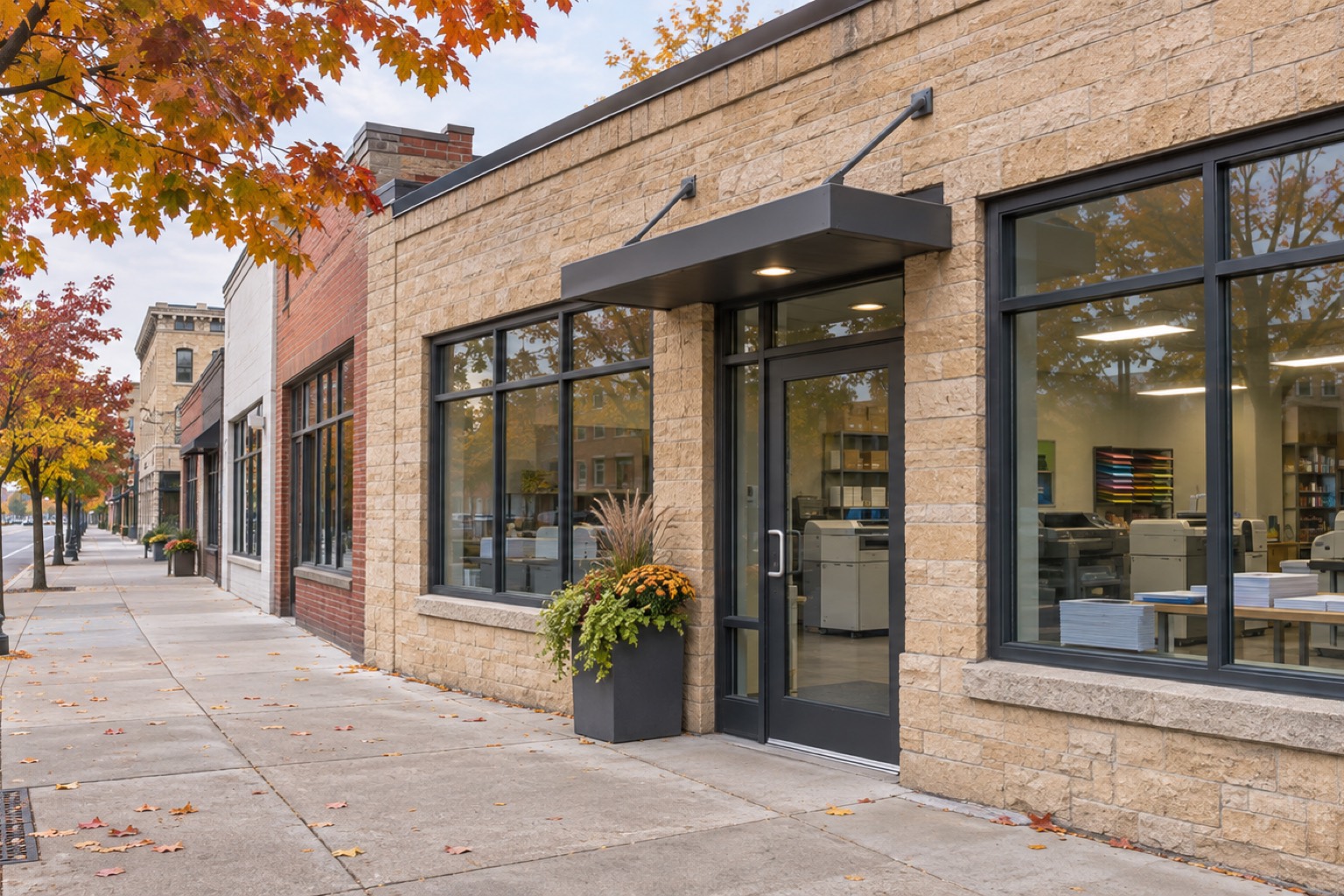
AI-generated editorial illustration. Not a photograph of an actual local business.
The market behind your business
Distinguish university visits, hospital locations and airport access
Syracuse University's campus-visit information describes guided and self-guided options and identifies its admissions Visitor's Center at 401 University Place for self-guided tour check-in.[1] An owner preparing to sell a business in Syracuse should distinguish public visits from the company's own customer activity. An individual's purchase, a family order and authorized university spending can involve different decision makers. Show actual purchasers and completed transactions rather than treat campus activity as evidence that a separate private company holds an institutional account.
SUNY Upstate's location directory distinguishes Upstate University Hospital at 750 East Adams Street from Upstate Community Hospital at 4900 Broad Road.[2] These are separate destinations, not interchangeable labels for every order. A service or supply company should explain the actual purchaser, site and receiving instructions relevant to its work. A hospital address can help locate a transaction without establishing supplier status, accepted scope or income. Another owner needs the private company's own authorization, fulfillment and settlement evidence before assessing concentration or continuity.
Syracuse Hancock International Airport's contact page distinguishes a terminal open around the clock from the TSA checkpoint's separate daily hours.[3] That is a useful reminder that a building's public availability does not establish identical access to every part of it. A private seller needs evidence for its own accepted delivery or service arrangements. Do not infer unrestricted commercial access, a tenant relationship or recurring airport revenue from public passenger information. Explain the company's actual operating requirements and rights through its records.
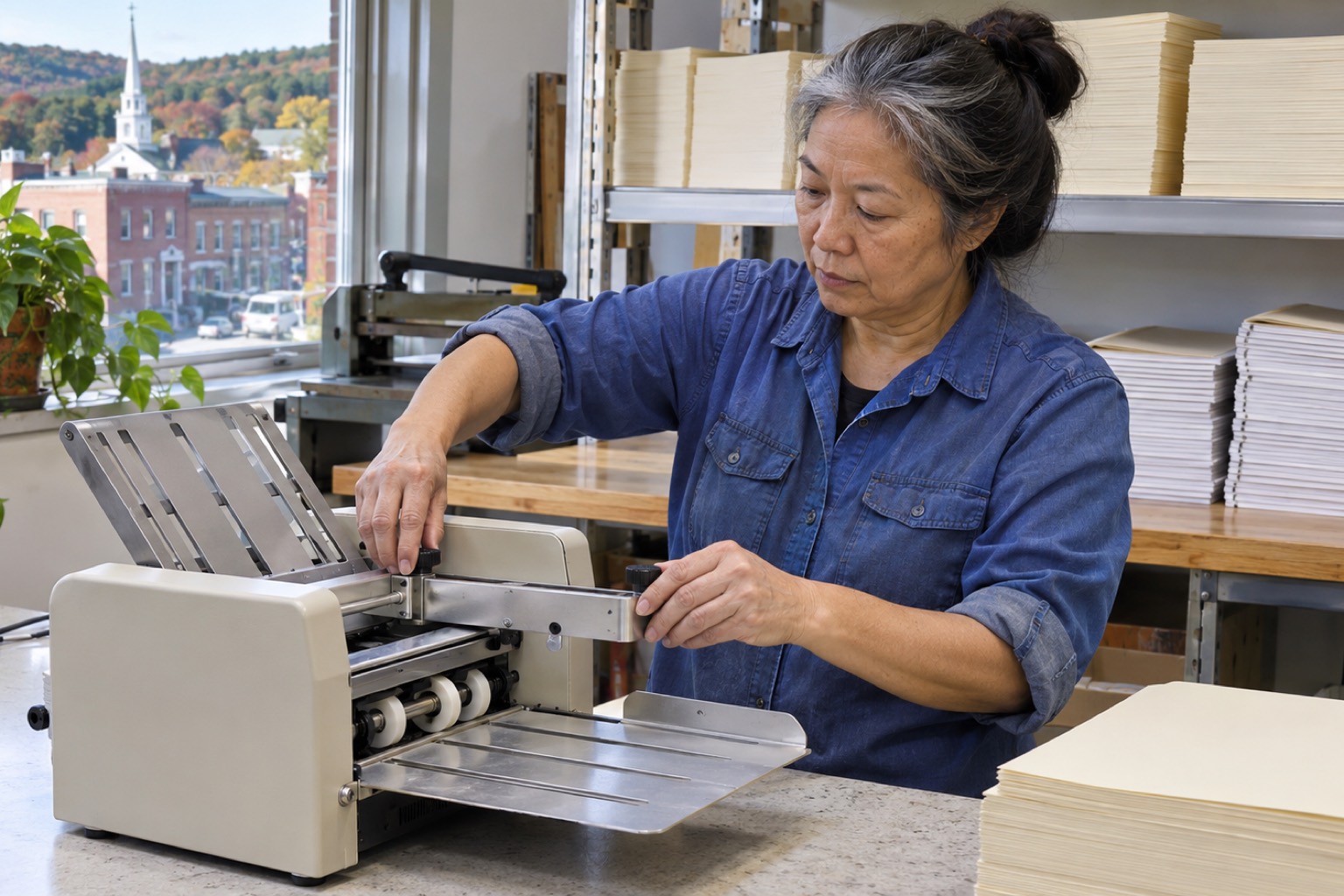
The illustrative print-finishing business shows a worker placing blank cream folders in a carton. It represents no actual Syracuse company or university, hospital or airport supplier. The example helps connect a finished physical product with the instructions that authorized production. Another owner needs to know the accepted quantity, specification, purchasing authority and completion requirements. A neat carton cannot establish a customer relationship or show whether the business has completed every duty attached to a receipt. Soften sale talk — no fake Proven Track Record slogans or an unverifiable Syracuse street office for Bridge Point Advisors. This page is Syracuse, New York — not Syracuse, Kansas. Compare with Oswego, Rome, Utica, Auburn, Skaneateles only on each company's own files.
Local context. Practical implications.
Make order specifications and approval routes part of the operating story
A print or finishing company may receive requests from an individual, an organization employee or another supplier. Explain who can accept a quote and who can approve changes. The contact who sends a file may differ from the purchaser or the person accepting delivery. A buyer needs that decision route to understand ordinary work and concentration, especially where the proprietor has become the informal link between the customer and the workshop.
For the illustrative folders, identify the accepted specification and the version staff use for production. A sample, a quotation and an approved order have different purposes. Describe how the company records a revision and prevents an earlier instruction from being mistaken for the current one. Another owner needs to understand the practical control behind the finished product rather than infer it from equipment, stock or a photograph of completed goods.
Follow a representative job through its full resource requirement. Estimating, proof review, sourcing, production, finishing, packing and delivery can affect contribution. Include outside work and rework where relevant. A larger invoice may involve more expensive materials or coordination rather than proportionately higher earnings. Show ordinary jobs and an exception that required additional time, with allocation limits stated clearly. The buyer needs economics that remain understandable after the owner's personal work is accounted for.
The university, hospital and airport sources describe distinct public contexts.[1][2][3] The seller's records establish whether any actual commercial relationship exists. Several delivery addresses may depend on one purchaser or intermediary, while an employee's individual order may be unrelated to organization spending. Explain the real pattern. Another owner can investigate continuity without treating a long list of destinations as proof of independent recurring customers or assuming recognizable institutions guarantee a private company's earnings.

AI-generated editorial illustration. Not a photograph of an actual local business.
A different sale story for every company
Key industries in Syracuse
What owners should prepare before taking a business to market — qualitative preparation, not hard deal tallies.
Printing, finishing and small production services
Describe accepted specifications, purchasing authority and the process used to release completed work. Separate samples, customer materials, owned stock and resources allocated to unfinished orders. Explain where the proprietor's judgment matters and when staff seek further approval. A buyer needs representative job economics alongside equipment and inventory. A full worktable or a carton of finished products can illustrate activity, but does not establish contribution, customer acceptance or the remaining duties associated with payments already collected. See manufacturing.
University-related and professional commercial support
Syracuse University's visitor information includes different tour formats and an admissions check-in location.[1] A private seller should explain actual customer routes instead of converting public campus visits into assumed local spending. Distinguish personal purchases from authorized organization orders and show accepted scope, delivery and settlement. Another owner can then assess concentration and continuity through the company's own evidence. A public visitor destination cannot establish supplier status, private access rights or the likelihood that an account continues after ownership changes. See consulting.
Hospital and healthcare-setting services
Upstate lists University Hospital and Community Hospital at different addresses.[2] A seller should locate actual work accurately and describe capability within the scope the business truly provides. Explain purchasers, receiving instructions and outside resources where relevant. Individual employee spending differs from institutional orders or work obtained through another contractor. A buyer needs the company's own transaction and completion evidence before assessing repeat trade, rather than infer a hospital relationship from a delivery destination or proximity to a healthcare setting. See medical practice.
Airport-related and regional commercial work
The airport's contact information distinguishes terminal availability from checkpoint hours.[3] A private company needs its own accepted operating and access arrangements. Explain travel, scheduling and customer authority relevant to actual work, and identify resources supplied by others. A buyer should not assume public passenger access establishes commercial permission or that airport presence guarantees revenue. The seller's own records need to demonstrate the accepted offer, its costs and the relationships being evaluated as part of the business. See retail.
Neighborhood retail, food and property services
An everyday local company should explain representative customers, operating periods and the work required to complete its offer. Include preparation, travel and follow-up where they affect contribution. Separate recurring history from exceptional projects and expected future opportunities. Another owner needs to understand the proprietor's role, team decisions and current commitments. Broad institutional and transport activity can locate the surrounding context, while the private company's own evidence establishes earning power, usable resources and the service obligations included in a sale discussion. See restaurant.
Valuation & exit prep
Soften valuation talk to supported earnings after a real manager wage — not a civic caption or leftover peer-metro multiple as twelve months of private profit. See business valuations and the sale-prep roadmap.
Local market perspective
Evaluate additional work through approval and production capacity
Business brokerage in Syracuse should make current performance understandable before a seller describes opportunities. Another service category, more organizational orders or different delivery arrangements may be options. State what has actually been tested and which resources remain necessary. A buyer should be able to assess the present company without relying on assumed improvements or treating surrounding institutions as a guaranteed source of future purchasing.
For the illustrative finishing business, more orders might require estimating and approval work before machines become the limiting resource. Explain the actual constraint. Extra paper or worktable space cannot resolve uncertain instructions, unavailable expertise or customer decisions still outstanding. Show a completed process change and its observed effect where evidence exists. Where it does not, present an idea as an investigation rather than include its expected benefit in the company's ordinary earning account.
Compare periods consistently. Changed product mix, a large one-time project, revised pricing or additional outside work can affect the same interval. Connect revenue movements with corresponding costs and timing. Local university, hospital and airport information supplies context,[1][2][3] while company transactions establish private performance. A buyer needs both the explanation and its limitations before attributing a favorable month to the wider Syracuse market or assuming the result repeats without the resources that supported it.
A clearer story for a prospective buyer
Syracuse, NY and surrounding areas
The ownership transition
Transfer the decision process from quotation through acceptance
Soft process steps aligned with Bridge Point Advisors practice — not invented close counts or a claimed Syracuse desk.
Understand the business
A handover plan should trace an ordinary order and a difficult exception. Follow inquiry, scope, customer authority, current instructions, sourcing, production, delivery and settlement. Show where staff find answers and the limits of their approval authority. For the illustrative folders, knowing which version was accepted matters as much as locating stock and equipment. A workshop tour cannot communicate every decision behind a completed transaction.
Prepare the presentation
Define proposed seller assistance through tasks and availability. Orientation to open orders, supplier introductions and help resolving an existing production issue have different purposes. Preserve useful answers where colleagues can retain them after the support period. Assign unfinished matters to a responsible person and next action. Formal arrangements need appropriate advice, while the practical objective remains a company whose earnings, resources and service promises another owner can understand without indefinite reliance on the proprietor's memory.
Plan the transition
Match seller assistance to accepted obligations and resources already available in Syracuse.
Due diligence
Due diligence — test lease, licenses, customer concentration, and quiet midweeks against local evidence — not a peer metro leftover.
Closing and transition
Closing and transition — hand over routines, contacts, unfinished work, and a clear endpoint so the buyer can run the next week without the founder.
Use the sale-prep roadmap and due diligence guides. M&A advisory fits when the company and buyer require that level of engagement.
Providing local expertise
Nearby markets we also serve
Oswego, New York
Underwrite on its own records.
Rome, New York
Underwrite on its own records.
Utica, New York
Underwrite on its own records.
Auburn, New York
Underwrite on its own records.
Skaneateles, New York
Underwrite on its own records.
Spring Hill, Florida
National desk — where Bridge Point lists from.
Begin with a clear picture of your Syracuse company
Bring your objectives, a concise operating description and the records already available. Explain actual purchasers, accepted specifications, current orders, resource ownership and decisions you handle personally. Bridge Point Advisors welcomes an initial discussion about preparation for a fuller presentation and matters requiring specialist review. Keep demonstrated performance separate from possible improvements, then consider the evidence, working knowledge and practical support another owner would need to evaluate the business and prepare for an ownership transition. Call (352) 515-0226 or contact us.
Or call (352) 515-0226
Questions from local owners
Frequently asked questions
About selling a business in Syracuse, New York
Does university visitor activity establish my company as a supplier?
Syracuse University's page describes campus visits and admissions check-in at 401 University Place.[1] That is public visitor information. A private seller needs its own purchaser, accepted order and settlement records. An individual's purchase and authorized university spending involve different relationships, even if both are connected with the campus.
Are Upstate's hospital addresses interchangeable for a sale account?
Its directory distinguishes University Hospital at 750 East Adams Street and Community Hospital at 4900 Broad Road.[2] A company should locate actual work and purchasers precisely. A delivery address alone cannot establish supplier status, accepted scope or several independent recurring customer relationships.
Does round-the-clock terminal availability establish all airport access?
The airport's contact page gives separate terminal and checkpoint hours.[3] A private business needs evidence for the access and operating arrangements relevant to its actual work. Public passenger information does not establish a tenant relationship, unrestricted commercial access or rights included in a proposed ownership transfer.
Why connect current specifications with unfinished orders?
A sample or earlier instruction may differ from the accepted work. Record the purchaser, current version, scope, payments, resources allocated and next action together. A buyer can then assess usable materials and remaining duties without assuming physical completion of a product means every customer promise has been fulfilled.
How do buyers think about value for a Syracuse, New York company?
Owner-operated shops often price around two to three and a half times seller's discretionary earnings after a real manager wage. With a lead already holding a quiet midweek, a directional band is often two and a half to four and a half times those earnings. Managed companies often price on adjusted EBITDA, commonly about three to six times near a ten million dollar price. Those ranges are directional, not a quote.
Who helps sell a business in Syracuse, New York?
Bridge Point Advisors. Start with a valuation or contact — call (352) 515-0226. The firm works nationally and does not claim a street office in Syracuse.

Ready to discuss selling your business in Syracuse?
Start with your goals, your recent results, and the company you are ready to transfer. Bridge Point Advisors — call (352) 515-0226. No street address is claimed for Bridge Point in Syracuse. Or contact us online. This page is Syracuse, New York — not Syracuse, Kansas.
Or call (352) 515-0226
Local research and sources
[1] Syracuse University, Campus Visits. Reviewed November 5, 2026 Source
[2] SUNY Upstate Medical University, Building Locations and Directions. Reviewed November 5, 2026 Source
[3] Syracuse Hancock International Airport, Contact. Reviewed November 5, 2026 Source