
Home / Locations / Lenoir, North Carolina
Your business. Your next chapter.
Business Broker in
Lenoir, North Carolina
Make the work behind your creative business visible
A business broker in Lenoir should look beyond an attractive finished object to understand the company that produces, sells or supports it. Bridge Point Advisors welcomes a discussion about your objectives and readiness for a possible ownership transition. A small display fabrication or creative retail business may combine purchased materials, customer property, commissioned work and the owner's personal design decisions. Show how those elements become accepted orders and supported earnings. Another operator needs to understand the current offer, unfinished obligations and knowledge held by staff before assessing what a change in ownership might involve. Bridge Point Advisors can help organize those facts around your selling goals — without inventing a Lenoir street office.
Or call (352) 515-0226
Why this market needs careful framing
Experience the Bridge Point advantage in Lenoir
Soft local framing — not Proven Track Record tallies, Deep Local Roots office claims, or Key Market Stats widgets.
Confidentiality first
Stage disclosures so a recognizable Lenoir door, specialty, or concentrated account is not named on day one.
National buyer outreach
Reach industry-first buyers without treating a drive-time as a peer-metro comparable.
Local operating knowledge
Frame territory, midweeks, and commitments as separate columns — not a claimed Lenoir street office.
Supported valuation methods
Price on supported earnings and a realistic continuing lead — not a civic caption as twelve months of profit.
Caldwell County — furniture, campus, and downtown work kept on this company's evidence
Bridge Point Advisors for Lenoir owners — without a claimed local street office
Bridge Point Advisors helps Lenoir and surrounding owners present their companies clearly — without treating a civic caption, undated directory listing, or leftover peer-metro multiple as twelve months of private earnings. Call (352) 515-0226. Soften sale talk — no Proven Track Record slogans or Key Market Stats widgets. We work nationally from Spring Hill.
Bridge Point Advisors
Lenoir, NC and surrounding areas. We work nationally from Spring Hill and do not list a fake Lenoir street office or unverifiable local hours.

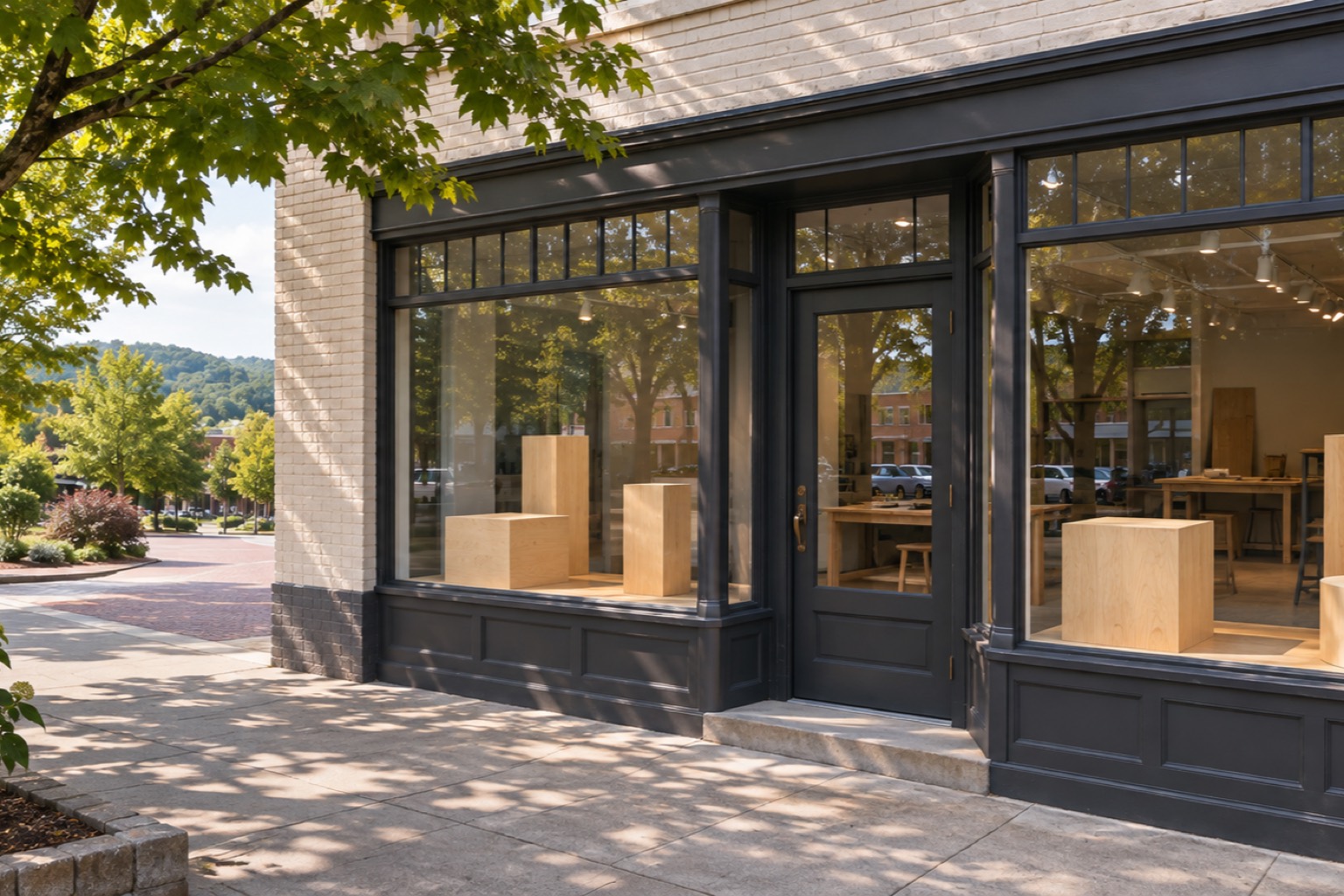
AI-generated editorial illustration. Not a photograph of an actual local business.
The market behind your business
Distinguish a downtown arts setting from private commercial rights
The Caldwell Arts Council describes its permanent sculpture collection as displayed throughout Caldwell County. It separately describes Tucker's Gallery sculptures on downtown Lenoir streets as works on loan from artists, with most available for sale.[1] An owner preparing to sell a business in Lenoir should preserve the difference between a countywide collection and a downtown sales setting. Neither establishes that a nearby independent shop owns exhibited work or receives a share of public art sales. Explain actual ownership and agreements before presenting visible objects as business inventory.
The City of Lenoir identifies T.H. Broyhill Walking Park at 945 Lakewood Circle SW and lists a walking path, lake, botanical gardens and nature sanctuary. Its rules prohibit bicycles, picnicking and fishing.[2] Treat this as a specific public walking destination rather than a general permission for every recreation or event service. A private business should establish its own customer connection and permitted activity. A public amenity may help explain a location without proving commercial access, customer spending or rights that would accompany a sale.
Caldwell Community College and Technical Institute lists its Caldwell Campus at 2855 Hickory Boulevard in Hudson, separately from its Watauga Campus in Boone.[3] Preserve Hudson's location when discussing workforce resources around Lenoir. Do not confuse the college with Lenoir Community College in Kinston or assume a campus name places it inside the city. Educational resources can inform a training discussion, while the company's existing staff capabilities and actual hiring experience must establish the skills available to its business today.
The illustrative workshop shows a protective felt pad beneath a small wooden display plinth. It depicts a fictional craft operation rather than a particular local fabricator or a work in the council's collection. That modest component introduces a useful sale question: how much practical knowledge sits beneath the finished presentation? Material selection, surface protection and customer approval can matter alongside the tools a buyer sees. Explain those choices through representative work, including who makes them and where the supporting information is retained. Soften sale talk — no fake Proven Track Record slogans or an unverifiable Lenoir street office for Bridge Point Advisors. Compare with Hickory, Morganton, Boone, Newton, Statesville only on each company's own files.
Local context. Practical implications.
Follow a display order from specification to release
Begin with the request the customer actually approved. A display base, a repaired retail fixture and a commissioned object may look similar on a workshop floor while carrying different scope, payment and ownership positions. Retain dimensions, finish choices and any agreed limits. Show when a design conversation became an accepted order and who approved later changes. A buyer should not need to infer the commercial position of every object from the departing owner's memory or from its appearance beside other materials.
Separate useful purchased stock from work reserved for specific customers. Timber, pads, coatings and hardware can have different uses and storage limitations. An attractive materials shelf cannot establish that everything is suitable for the current offer. Explain damaged or obsolete items and identify resources committed to unfinished work. Customer-owned objects also need their own record. Their physical presence may support a service responsibility without making them assets included in the proposed transfer of the business.
Show the resources consumed by a finished job. Include design discussion, material preparation, subcontracted work, packing, delivery and adjustments following collection where relevant. A modest display base may be profitable or unproductive depending on the accepted specification and time required. Keep completed examples alongside the financial account. Another operator needs to understand why similar-looking orders can carry different contribution and which choices still require the proprietor's personal attention before treating a broad sales category as repeatable earnings.
The countywide art collection and downtown loaned works illustrate why custody deserves careful language.[1] Use the seller's own documents to establish rights in any objects it holds. A public display cannot prove ownership, a commission agreement or permission to reproduce an artist's design. If intellectual property or consignment arrangements matter, identify the actual documents and questions for appropriate advisers. The objective is a commercial description another owner can investigate without confusing a creative setting with rights the private company has never demonstrated.

AI-generated editorial illustration. Not a photograph of an actual local business.
A different sale story for every company
Key industries in Lenoir
What owners should prepare before taking a business to market — qualitative preparation, not hard deal tallies.
Creative fabrication and display services
Explain the supported offer, including the materials, finishing decisions and delivery responsibilities involved. A general workshop illustration cannot establish structural suitability or conservation capability. Use real completed jobs to show what staff can perform and when qualified outside assistance is required. Identify work still dependent on the owner's design judgment. A buyer can assess a useful fabrication operation more clearly when accepted specifications, resources and completion evidence appear together rather than being condensed into a photograph of attractive objects. See retail.
Galleries and independently owned art retail
The Arts Council distinguishes its countywide permanent collection from artist-loaned downtown works.[1] A private retailer should likewise identify owned stock, consigned pieces and customer property. Explain the settlement position when an item sells, any outstanding payment to its maker and permissions affecting presentation. The seller's actual commercial arrangements must establish the inventory and earning model. Proximity to public art cannot show a private shop's margin, access to artists or entitlement to continue using a particular exhibition relationship. See gift shop.
Recreation-adjacent retail and everyday services
The Walking Park has specified amenities and activity restrictions.[2] A seller should describe only the business connection supported by its own records. Walking visitors, ordinary neighborhood customers and private event clients may purchase differently, if they purchase at all. Show actual transaction patterns before connecting a public destination with company income. Proposed activities need their own investigation and appropriate permission; a recognizable park cannot substitute for the operating evidence a buyer needs to understand a private enterprise. See retail.
Skilled trades and regional workforce resources
The college's Caldwell Campus has a Hudson address, while its Watauga Campus is in Boone.[3] Preserve that geography when explaining any training relationship. Private capability still depends on actual employees, demonstrated skills and resources required for accepted work. Identify tasks learned internally and duties needing outside qualifications. A workforce resource may be useful context for future planning without establishing recruitment availability, staff retention or readiness to perform the seller's particular fabrication and finishing work under a new owner. See retail.
Local commercial supply and shop support
A business serving other retailers may depend on purchasing contacts, delivery windows and the ability to resolve unusual requests. Explain those relationships through actual orders. The shop receiving a fixture may differ from the party approving payment. Separate repeat purchasing from an expectation of future projects. Another operator needs the actual service territory, costs and concentration before assessing whether a collection of familiar local names represents dependable contribution or simply a history of occasional work completed by the proprietor. See retail.
Valuation & exit prep
Soften valuation talk to supported earnings after a real manager wage — not a civic caption or leftover peer-metro multiple as twelve months of private profit. See business valuations and the sale-prep roadmap.
Local market perspective
Evaluate opportunities through supported operating changes
Business brokerage in Lenoir should connect possible improvements to the work a company already performs. A clearer specification form could reduce avoidable revisions; a better materials record might clarify what can be promised. Describe measured results where they exist and include the effort needed to achieve them. Otherwise identify the proposed change and the question still to test. A new display line or delivery territory remains a separate commercial investigation until customers, costs and practical capacity support its contribution.
Compare the mix of orders as well as the total receipts. More commissioned work can involve more consultation and fewer repeatable tasks. Standard items may require inventory and storage even when production appears simpler. Explain meaningful changes using consistent periods and the actual duties performed. Another owner needs to see whether increased receipts came with additional hours, purchasing exposure or unresolved customer obligations before assuming a headline increase represents stronger earnings available through the same operating resources.
Local creative activity gives a setting for investigation, while public collections and downtown display arrangements cannot establish private demand.[1] Identify the channel through which the seller's actual customers find and purchase the offer. An artist introduction, a retail inquiry and a confirmed fabrication order are different commercial stages. Preserve those distinctions in the presentation so the current company can be assessed on demonstrated results while future relationships remain visible as possibilities requiring further work and agreement.
A clearer story for a prospective buyer
Lenoir, NC and surrounding areas
The ownership transition
Transfer specification decisions and unfinished commitments
Soft process steps aligned with Bridge Point Advisors practice — not invented close counts or a claimed Lenoir desk.
Understand the business
A practical orientation can follow an accepted display order from initial dimensions to release. Show how staff retrieve the specification, choose materials, record changes and check the finished result. Explain when work stops for customer approval or outside expertise. The small protective pad in the illustration represents one decision beneath the visible product. A list of machines cannot communicate every such choice, so retain references and show the staff knowledge supporting the work another operator has been asked to evaluate.
Prepare the presentation
Define possible assistance through realistic tasks and availability. Reviewing open jobs, explaining material records and introducing relevant contacts may help where agreed. Assign responsibility for unresolved approvals, customer property and outstanding maker settlements. Appropriate advisers should address formal transaction terms. The purpose of orientation is to support specific dependencies identified during investigation, with clear limits, rather than leave an indefinite expectation that the seller will continue supplying every design decision or remembering the commercial history of every object in the workshop.
Plan the transition
Match seller assistance to accepted obligations and resources already available in Lenoir.
Due diligence
Due diligence — test lease, licenses, customer concentration, and quiet midweeks against local evidence — not a peer metro leftover.
Closing and transition
Closing and transition — hand over routines, contacts, unfinished work, and a clear endpoint so the buyer can run the next week without the founder.
Use the sale-prep roadmap and due diligence guides. M&A advisory fits when the company and buyer require that level of engagement.
Providing local expertise
Nearby markets we also serve
Hickory, North Carolina
Underwrite on its own records.
Morganton, North Carolina
Underwrite on its own records.
Boone, North Carolina
Underwrite on its own records.
Newton, North Carolina
Underwrite on its own records.
Statesville, North Carolina
Underwrite on its own records.
Spring Hill, Florida
National desk — where Bridge Point lists from.

Begin with a clear picture of your Lenoir company
Bring your objectives, recent performance and a practical description of the business you are preparing to transfer. Explain owned materials, consigned objects, accepted commissions and the judgments handled personally. Bridge Point Advisors welcomes an initial conversation about preparation and the information needed for a fuller presentation. Accurate local context and a supported account of operating responsibilities give another owner a useful starting point for investigating current earnings, remaining questions and assistance that may support a considered ownership change. Call (352) 515-0226 or contact us.
Or call (352) 515-0226
Questions from local owners
Frequently asked questions
About selling a business in Lenoir, North Carolina
Does a downtown sculpture display establish ownership by a nearby shop?
The Arts Council distinguishes its countywide permanent collection from downtown works loaned by artists.[1] A private business needs its own ownership, consignment and settlement evidence. Physical presence or proximity cannot establish an object as inventory included in the proposed business sale.
Can a park description support every visitor-related business activity?
The city's Walking Park page identifies specific amenities and restrictions, including no bicycles, fishing or picnicking.[2] Check the actual activity and permission required. Your company's own transactions must establish any relationship between the public destination and private income.
Is the college's Caldwell Campus located in Lenoir?
The official college site lists it in Hudson and separately lists the Watauga Campus in Boone.[3] Preserve those locations in a workforce description. A campus resource cannot guarantee hiring outcomes or establish capabilities already held by the private company being sold.
Why include protective materials in sale preparation?
Small materials can reveal purchasing judgment, customer requirements and owner dependence beyond a machinery list. Show how staff choose and record them for accepted work. Another operator can then investigate the skills and resources supporting the finished offer, rather than infer readiness from equipment alone.
How do buyers think about value for a Lenoir, North Carolina company?
Owner-operated shops often price around two to three and a half times seller's discretionary earnings after a real manager wage. With a lead already holding a quiet midweek, a directional band is often two and a half to four and a half times those earnings. Managed companies often price on adjusted EBITDA, commonly about three to six times near a ten million dollar price. Those ranges are directional, not a quote.
Who helps sell a business in Lenoir, North Carolina?
Bridge Point Advisors. Start with a valuation or contact — call (352) 515-0226. The firm works nationally and does not claim a street office in Lenoir.

Ready to discuss selling your business in Lenoir?
Start with your goals, your recent results, and the company you are ready to transfer. Bridge Point Advisors — call (352) 515-0226. No street address is claimed for Bridge Point in Lenoir. Or contact us online.
Or call (352) 515-0226
Local research and sources
[1] Caldwell Arts Council, About the Arts Council. Reviewed November 6, 2026 Source
[2] City of Lenoir, Broyhill Walking Park. Reviewed November 6, 2026 Source
[3] Caldwell Community College and Technical Institute, official campus information. Reviewed November 6, 2026 Source