
Home / Locations / Glenwood Springs, Colorado
Your business. Your next chapter.
Business Broker in
Glenwood Springs, Colorado
Explain the customer area behind your business
A business broker in Glenwood Springs should help you distinguish where customers come from, where service takes place, and who actually pays the company. A regional service center can support several kinds of trade, while each enterprise has its own relationships and costs. Bridge Point Advisors can help organize that evidence around your plans for an ownership change. Begin with completed transactions and the resources behind them. A purchaser gains a clearer view when the presentation explains the company's actual reach without assuming every customer is a visitor or every assignment takes place at the address shown on an invoice.
Or call (352) 515-0226
Garfield County — I-70 / Colorado & Roaring Fork confluence
Local market knowledge for Glenwood Springs owners
Bridge Point Advisors helps Glenwood Springs and Garfield County owners present retail and specialty shops, food and dining, lodging and visitor support, technical and professional services, and repair and skilled trades clearly — including New Castle, Silt, or Carbondale when the invoices already name those places — without treating a two-valley hub map, a visitor-directory label, or a hot-springs Saturday as a substitute for the company's own files. Call (352) 515-0226. No street address is claimed for Bridge Point in Glenwood Springs.
Bridge Point Advisors
Glenwood Springs, CO and surrounding areas. We work nationally from Spring Hill and do not list a fake Glenwood Springs street office or unverifiable local hours.

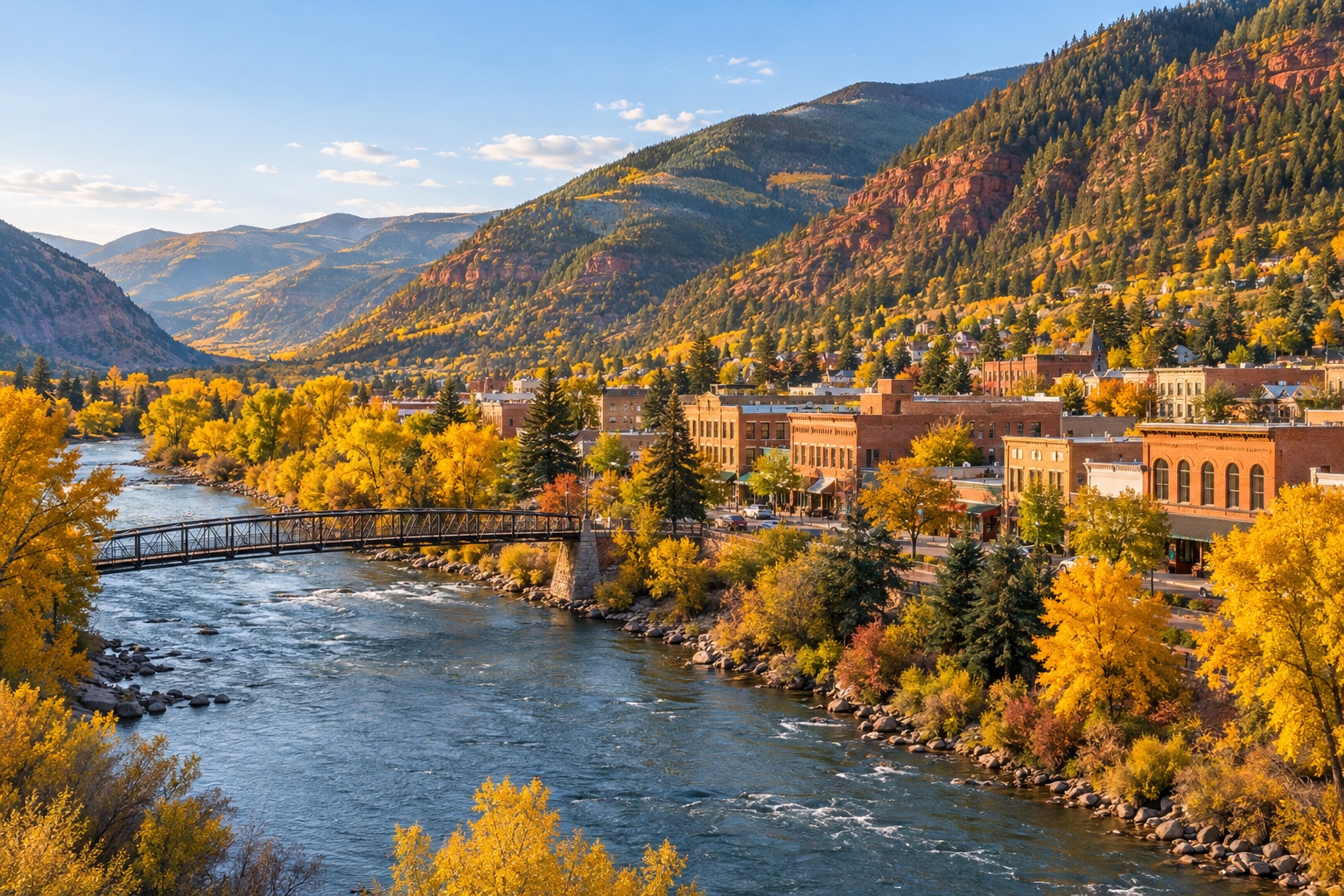
AI-generated editorial illustration. Not a photograph of an actual local business.
The market behind your business
A confluence of valleys creates several commercial geographies
The city's economic development overview places Glenwood Springs at the Colorado and Roaring Fork river confluence and the intersection of I-70 and State Highway 82. It describes a regional hub linking the two valleys and a downtown mix serving residents and visitors.[1] That setting does not establish the customer composition or profitability of a private company.
If you intend to sell your business in Glenwood Springs, map the commercial relationships your records actually support. A customer's billing address, the place work is performed, and the location of the premises may differ. Show those distinctions at an appropriate level of detail before making claims about the market the enterprise reaches.
Consider an illustrative service operator based in the city. It might complete work at its premises for customers from elsewhere, perform assignments at other locations, or supply another organization. These are different models even when they appear together in one annual sales report. Explain how each activity uses staff, equipment, and time.
The seller should also identify what the records cannot establish. A transaction alone may not reveal whether a customer was visiting, commuting, or living nearby. Avoid assigning a category without evidence. Soften sale talk to staged disclosure — not "Proven Results," fake testimonials, or an unverifiable Glenwood Springs street office.
Before you go to market
Prepare a commercial map supported by transactions
To sell your business in Glenwood Springs, identify the customer groups and service locations your records can explain. Use appropriate categories and protect identifying detail during introductory discussions. A purchaser should understand the actual reach of the company before considering expansion into another area.
Connect representative transactions with their operating requirements. Show who requests the work, where it occurs, which resources are used, and how completion is recorded. Explain any difference between the contracting party, service location, and billing address. Reconcile the operating account with financial reports and review proposed adjustments with advisers.
Prepare that picture before marketing begins. Soften claims to supported evidence — not Maximum Value absolutism, fake Experience tallies, or invented client-satisfaction percentages.
Local context. Practical implications.
The local map shows amenities and institutions, not private accounts
Visit Glenwood's 2026 map identifies Valley View Hospital, shopping areas, transport points, lodging, and trail systems. It also marks Highway 82 connections toward the CMC Spring Valley campus, Carbondale, Basalt, and Aspen.[2] Those locations should remain distinct. A mapped destination or institution is not proof that the business being sold supplies it.
A seller should explain its own role through actual records. Does the company receive customers at a shop, deliver a product, or provide service at another site? Who authorizes the purchase, and who pays? A purchaser needs these answers before interpreting a broad statement that the business serves the regional economy.
Connect geography with operating requirements. A premises-based sale can require different preparation from a field assignment or delivery. Show actual staff time, equipment, and provider arrangements. Explain the owner's contribution to scheduling or customer communication where those responsibilities still depend on the seller.
Then reconcile the operating account with financial reports. Compare with Aspen, Vail, Grand Junction, Rifle, and Denver only on each company's own records — not a Galena Street multiple, an Eagle village rent, a Mesa County desk, or a Front Range slide pasted onto Garfield County.

AI-generated editorial illustration. Not a photograph of an actual local business.
A different sale story for every company
Key industries in Glenwood Springs
What owners should prepare before taking a business to market — qualitative preparation, not hard deal tallies.
Retail, specialty products and everyday shopping
Explain actual product movement and the customer channels used. Show purchases at the premises, collections, deliveries, or other arrangements where records permit. Avoid treating every customer from outside a local address area as a tourist without evidence. See retail and gift shops.
Food, dining and prepared orders
Show the work behind the company's own customer mix. Local service, group orders, and other trade may draw on the same preparation space while using staff and supplies differently. See restaurants and bars.
Lodging, outdoor and visitor-support businesses
Describe actual service periods, customer transactions, and the resources required to deliver the offer. Keep nearby attractions and transport points separate from private revenue. See hotels and sporting goods.
Technical, professional and organizational services
Identify the actual contracting customer and place of work. Mapped hospitals, campuses, and offices introduce local institutions, not assumed accounts. See medical practices and consulting.
Repair, property and skilled trades
Explain the actual service territory and the resources committed to reaching it. Show premises work separately from site visits where the model requires it — including New Castle or Silt stops the invoices already name. See HVAC, construction, and auto repair.
Valuation & exit prep
Soften valuation talk to supported earnings within the company's actual service geography — not a two-valley hub caption or a visitor-directory label. See business valuations and exit planning.
The ownership transition
Transfer the knowledge behind the service territory
Soft process steps — hand over customer geography and scheduling knowledge; no invented close counts.
Understand the business
Name who authorizes work, where it is delivered, and how the team coordinates resources — separate from a two-valley map caption.
Prepare the presentation
Organize representative transactions with ordinary records. Show confirmation, service location, and how completion reaches the accounts.
Confidential marketing
Screen outreach and stage disclosures so a recognizable Grand Avenue room, specialized route, or institutional relationship is not named on day one.
Due diligence
Test customer geography, shared costs, and open promises against company evidence — not a visitor map or a restaurant-directory category count.
Closing and transition
Prepare a dated schedule of open orders, projects, deposits, and customer promises spanning the ownership change, with a clear endpoint for seller support.
Use the sale-prep roadmap and due diligence guides. M&A advisory fits when the company and buyer require that level of engagement.
Local market perspective
A varied dining offer illustrates the limits of broad market labels
Visit Glenwood's restaurant directory presents different food and service categories, including breakfast, lunch, dinner, coffee, and varied cuisines.[3] These are directory categories, with businesses potentially appearing in more than one. They should not be summed as separate establishment counts or treated as proof of the company's own customer mix.
For a seller, the useful task is to explain actual trade across comparable periods. Show completed purchases or assignments, changes in the offer, and the costs behind them. If the customer mix has shifted, identify what the records demonstrate and what remains uncertain. A purchaser needs a company account before interpreting a broad claim about regional or visitor growth.
Before you sell your business in Glenwood Springs, Bridge Point Advisors also serves Aspen, Vail, Grand Junction, Rifle, Gunnison, and Denver — each underwritten on its own records, without a claimed Glenwood Springs street office. New Castle and Silt fold into this Garfield labor pool when the invoices already name them; they do not get separate listing pages.
A clearer story for a prospective buyer
Glenwood Springs, CO and surrounding areas
Providing local expertise
Nearby markets we also serve
Aspen, Colorado
Pitkin County — four mountains and Highway 82 are not this Garfield confluence rent.
Vail, Colorado
Eagle County village — underwrite separately from this I-70 canyon file.
Grand Junction, Colorado
Mesa County I-70 scale — not a Grand Avenue tourist CAM.
Rifle, Colorado
West-valley energy-adjacent edge — compare only when invoices already name both desks.
Gunnison, Colorado
Western campus plus Crested Butte overlay — different valley clerk.
Denver, Colorado
Front Range comps stay off a Garfield lease — underwrite separately.

Begin with the market your records can explain
Bring recent accounts, a practical description of customer and service geography, and examples connecting relationships with completed work. Include staff duties, provider arrangements, and promises still open. Contact Bridge Point Advisors — call (352) 515-0226. No street address is claimed for Bridge Point in Glenwood Springs.
Or call (352) 515-0226
Glenwood Springs business brokerage FAQ
Frequently Asked Questions
About selling a business in Glenwood Springs, Colorado
Is every customer from outside town a visitor in Glenwood Springs?
Use the information the company actually records. Billing address, place of service, and customer purpose can differ. A purchaser needs accurate categories and supported transactions rather than an assumption that every person from another community belongs to the same market segment.
Does a mapped institution establish a company customer?
Maps show locations, not private contracts. The 2026 visitor map identifies facilities and regional connections, while company records should establish any actual relationship. Review the contracting party, scope, and relevant arrangements before promising continuing work to a purchaser.
Can customer segments be valued without their shared costs?
Explain how staff, premises, equipment, and administration support the actual offer. Reconcile operating categories with financial reports and review allocation questions with advisers. A buyer needs a realistic view of the whole enterprise rather than separate sales totals presented without the resources behind them.
What regional knowledge should be included in the handover?
Show customer authorization, service locations, scheduling, and exception handling where relevant. Address open promises and provider arrangements with advisers and the purchaser. A focused transition should transfer the working process behind relationships rather than only a list of addresses without its commercial context.
How are Glenwood Springs businesses usually valued?
A business valuation should examine supported performance within the company's actual service geography. Owner-operated shops often price on seller's discretionary earnings after a real manager wage; a managed company large enough for adjusted EBITDA is a different conversation. Those ranges are directional, not a quote. A hot-springs Saturday or an Aspen powder caption is not the year.
Do New Castle, Silt, and Carbondale price like downtown Glenwood Springs?
New Castle and Silt share this Garfield labor pool when the invoices already name them, and they do not share a Grand Avenue tourist rent. Carbondale is the Roaring Fork leak toward Aspen — a book that actually invoices Pitkin belongs on the Aspen page. Rifle stays an energy-adjacent edge unless you already invoice both desks.
How should Glenwood Springs compare with Aspen, Vail, or Grand Junction?
Compare only on each company's own records. Aspen is a Pitkin core, Vail is an Eagle village, and Grand Junction is Mesa County I-70 scale. None of those clerks is a substitute for a Garfield confluence file. Bridge Point Advisors can be reached at (352) 515-0226.

Ready to discuss selling your business in Glenwood Springs?
Contact Bridge Point Advisors for a confidential consultation. Start with your goals, your recent results, and the customer geography a successor can run. Call (352) 515-0226. No street address is claimed for Bridge Point in Glenwood Springs.
Or call (352) 515-0226
Local research and sources
[1] City of Glenwood Springs, Economic Development overview; confluence, I-70/SH 82 and two-valley regional hub setting; accessed October 24, 2026. Source
[2] Visit Glenwood, 2026 visitor map; named facilities and city/regional connections, not private accounts; reviewed October 24, 2026. Source
[3] Visit Glenwood, Restaurants directory; varied service categories (directory labels, not unique establishment counts); reviewed October 24, 2026. Source