

Home / Locations / Dodge City, Kansas
Your business. Your next chapter.
Business Broker in
Dodge City, Kansas
Present the business behind Dodge City's recognizable name
Dodge City is known for Western heritage, but a business sale here can involve very different customer groups: industrial purchasers, local households, regional service customers, and visitors. A business broker in Dodge City should help explain where your company fits within that mix. The strongest presentation connects local context to actual revenue, staffing, assets, and customer relationships. Whether you operate a trade business, a restaurant, a supplier, or a specialty shop, preparation begins with showing how the company works today and what a successor would need to keep its customers returning.
Or call (352) 515-0226
Ford County — US-50 / US-56 / US-400 packing and Front Street overlay
Bridge Point Advisors for Dodge City owners
Bridge Point Advisors helps Dodge City and Ford County owners present industrial supply and maintenance, restaurants and food service, visitor retail and experience shops, home services and construction trades, and regional retail or professional desks clearly — including Cimarron when the invoices already share this desk — without treating a Boot Hill postcard, a STAR Bond announcement, a Garden City packing leftover, or a Wichita aircraft multiple as a substitute for the company's own files. Call (352) 515-0226. No street address is claimed for Bridge Point in Dodge City.
Bridge Point Advisors
Dodge City, KS and surrounding areas. We work nationally from Spring Hill and do not list a fake Dodge City street office or unverifiable local hours.
Local market perspective
Distinguish announced tourism improvements from current results
The city's 2026 Heritage Area update describes another phase of STAR Bond-supported redevelopment. The listed enhancements include a boutique hotel, a motorsports museum, nighttime presentation features, and streetscape improvements.[4] These are presented as coming enhancements in the city's update. They should not be described in a business sale package as fully operating attractions or as revenue already earned by nearby businesses.
For an owner considering a sale, the practical approach is to separate three categories: the business's established performance, work already secured, and possible future opportunities. A downtown retailer might identify a potential benefit from improved visitor circulation, but the buyer should still see current sales and the investment needed to pursue that opportunity.
Housing provides a different example. The Development Corporation reports a ribbon cutting and open house at Rodeo Hills, including new homes and additional housing choices.[3] A seller with related business can document actual orders or service relationships. The existence of the development alone should not be converted into a forecast for that company. Soften peer paste from Garden City, Liberal, Meade, and Wichita.
A clearer story for a prospective buyer
Dodge City, KS and surrounding areas
The ownership transition
Train the successor for the work that happens between orders
Soft process steps — transfer decisions that keep the company dependable; no invented close counts.
Understand the business
Show how staff prioritize an urgent request, check a specification, handle a missing shipment, or adjust a reservation. These tasks often reveal more about the operation than a simple tour of the premises.
Prepare the presentation
For businesses balancing local and visitor demand, include both ordinary and busy-period procedures. For commercial suppliers, review approval steps and the way technical information is recorded. For trades, clarify responsibility for estimates, unfinished jobs, and customer follow-up.
Plan the transition
Agree on open commitments before handover: orders, deposits, warranties requiring attention, goods awaiting collection, and work in progress. Transfer business-controlled communication channels through an organized process. Define the seller's support period and the questions it is intended to address.
Use the sale-prep roadmap and due diligence guides. M&A advisory fits when the company and buyer require that level of engagement.
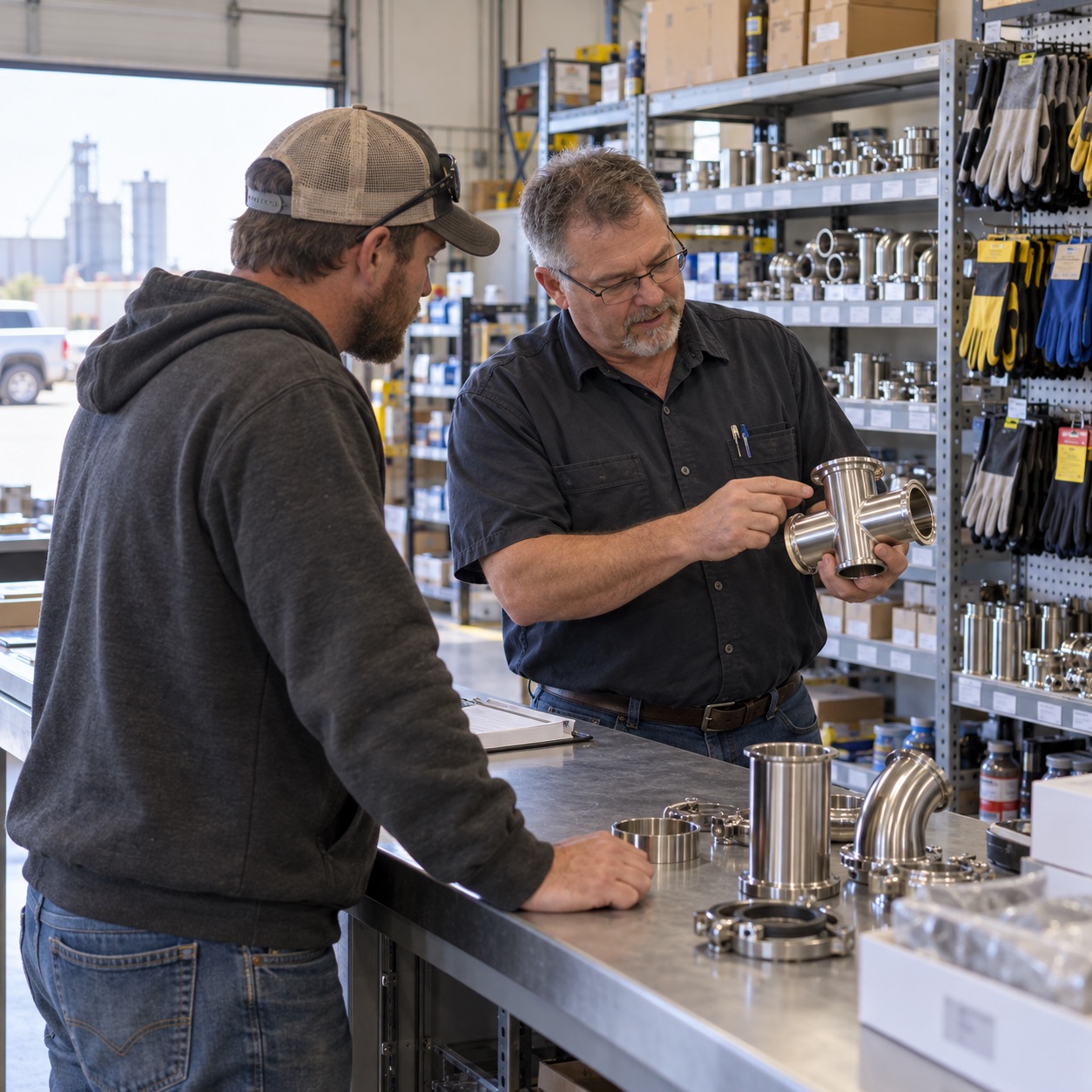
AI-generated editorial illustration. Not a photograph of an actual local business.
The market behind your business
Separate the visitor economy from the working economy
The Dodge City/Ford County Development Corporation identifies an industrial base that includes beef processing and wind energy, alongside manufacturing and tourism. Its description covers the city and county area, so it should not be treated as a city-only business count.[1] For a seller, this combination suggests a useful first question: which part of that economy actually produces your earnings?
A supplier serving commercial accounts may depend on order reliability and technical knowledge. A downtown shop may rely on a combination of residents and visitors. A restaurant could serve workers during ordinary weekdays and travelers on other occasions. Those different patterns can exist within the same company, but they should be explained separately when the records support it.
If you want to sell a business in Dodge City, start by classifying revenue in a way that reflects purchasing behavior. Review recurring accounts, individual transactions, event-related work, and one-time projects. Identify whether orders come through established relationships, location visibility, online discovery, or referrals. This gives a buyer a more useful picture than a general statement that Dodge City attracts visitors and investment.
Boot Hill Museum remains a specific tourism anchor promoted by the local convention and visitors bureau.[2] Its presence helps explain the destination, but a nearby business should demonstrate its own visitor trade through bookings, sales patterns, or customer information. Geographic proximity and an attractive community story are context. The company's records establish how those features translate into operations. Compare with Garden City, Liberal, and Wichita only on each company's own records — not as twins of this Ford County file.
A different sale story for every company
Key industries in Dodge City
Five business models worth presenting on their own terms — qualitative preparation, not hard deal tallies or invented close counts.
Industrial supply and maintenance
A seller in industrial support should document specifications, lead times, quality checks, and the procedure for urgent requests. Separate ordinary replenishment from major project orders. Review customer concentration and the resources required to meet service expectations. Buyers need to see whether the company succeeds through specialized inventory, skilled employees, response speed, or a combination of these strengths. The explanation should be supported by records of actual work. See manufacturing, staffing, and trucking.
Restaurants and food service
A restaurant's Dodge City story may include residents, workers, visitors, and group bookings. Break down sales by meaningful service periods and channels. Review preparation labor, food waste, staffing, and delivery or catering costs. Show how the business performs during normal weeks as well as unusually busy dates. A buyer can assess the operation more clearly when the sources of demand and the cost of serving each are visible together. See restaurants.
Visitor retail and experience businesses
For a business connected to Western heritage tourism, explain the route from visitor interest to a purchase. Review product categories, reservations, group arrangements, online inquiries, and seasonal staffing. Distinguish owned stock from consigned merchandise and identify any permissions or agreements essential to the operation. Tourism promotion provides context, while your transaction history shows which offerings customers actually buy and how consistently they do so. See retail and gift shops.
Home services and construction trades
Housing activity can create different kinds of work at different stages. Separate developer or contractor assignments from homeowner projects and recurring service. Document quotations, job progress, materials already purchased, and responsibilities for unfinished work. A purchaser should understand both the current backlog and the capacity available to complete it. Explain how the company schedules work without assuming that a local development will automatically produce future orders. See HVAC, construction, and plumbing.
Regional retail and professional services
A company drawing customers from beyond Dodge City should show the actual geographic reach of its trade. Review billing addresses, appointment patterns, delivery arrangements, and repeat business. Explain how customers find the company and why they return. Where the owner personally manages important relationships, document the work involved and the staff or systems that can support continuity. Regional reach is most persuasive when its operating requirements are clear. See medical practices and auto repair.
Valuation & exit prep
Soften valuation talk to supported earnings, ordinary weeks, and owner work — not a Boot Hill photograph or a STAR Bond caption standing in for demand. See business valuations and exit planning.
Local context. Practical implications.
Commercial service and household demand require different evidence
A business connected to industrial customers should explain the purchasing process behind its sales. Identify the work performed, response expectations, equipment requirements, and people responsible for fulfilling orders. A history of repeat purchases can be valuable evidence, but it should not be described as a guaranteed contract unless an actual agreement supports that description.
For businesses serving local households, the presentation may focus more on convenience, repeat visits, and the ability to manage a growing or changing service area. The Development Corporation's September 2026 report describes the Rodeo Hills housing development and its new rental homes and market-rate triplexes.[3] This is a specific example of housing activity, not proof that every household service company has gained customers.
An owner can investigate the relationship using service addresses, customer acquisition records, and repeat orders. If your business has completed work in a new neighborhood, distinguish initial construction or move-in activity from ongoing maintenance. A buyer needs to understand whether revenue is project-based, recurring, or still only an opportunity.
Dodge City's economic mix also makes staffing responsibilities important. Explain who handles commercial quotations, who serves walk-in customers, and who manages scheduling across different kinds of work. A company with several revenue streams can be resilient when they are well managed, but complexity also requires coordination. Show the systems that make the mix workable, including ordering routines, employee knowledge, and the owner's current decision-making role. Soften peer paste from Garden City, Meade, Ashland, and Coldwater unless invoices already support that work.

AI-generated editorial illustration. Not a photograph of an actual local business.
Prepare before going to market
Build a buyer-ready account of the company's different revenue streams
Begin with the sales ledger and operating calendar. Identify the categories that explain the business: commercial accounts, household work, visitor purchases, recurring service, or special projects. Use consistent categories across periods so a buyer can follow changes. If the accounting system does not already provide that detail, prepare a supported schedule without presenting estimates as audited facts.
For commercial work, gather the documents behind repeat orders. Include specifications, service histories, customer approval processes, and any agreements relevant to ongoing work. Identify which relationships require the owner's technical judgment or personal attention. A successor needs to know how the company meets expectations after the seller is no longer the first person called.
For visitor or event-related trade, assemble a calendar showing the timing of sales, staffing, purchases, and reservations. Explain how deposits, cancellations, and group commitments are handled. Include quiet periods as well as busy ones. Before you sell your business in Dodge City, inspect equipment, inventory, storage, and the premises arrangement, then reconcile sales schedules with statements. Soften claims to supported evidence — not Maximum Value absolutism or a Wichita aircraft multiple pasted onto a Ford County Tuesday.
Providing local expertise
Nearby markets we also serve
Garden City
Finney County packing peer — not this Front Street rent.
Liberal
Seward packing desk — keep clerks and licenses separate.
Wichita
Aircraft and I-35 leftover is not this Ford County week.
Salina
I-70 crossroads — different underwriting story.
Coldwater
Comanche County seat — not leftover Dodge rent.
Ashland
Clark County courthouse — keep books separate.
Meade
Meade County context — underwrite on invoices, not miles.
Jetmore
Hodgeman peer — fold in only when invoices name it.
Pratt
Pratt County weekday — compare only on each company's records.
Hays
Ellis campus leftover is not this packing floor.
Fort Dodge, IA
Same name fragment, different state — Iowa clerk.
Spring Hill, FL
Bridge Point home base — national firm, not Kansas-only.

Start with your company, your customers, and your goals
Prepare recent financial records, a customer-mix summary, and an outline of your responsibilities. Contact Bridge Point Advisors to discuss selling your business in Dodge City, Kansas — call (352) 515-0226 or start at /contact.
Or call (352) 515-0226
Questions from local owners
Frequently asked questions
About selling a business in Dodge City, Kansas
Should planned Heritage Area projects be included in my sale presentation?
They may be relevant context, particularly for a downtown or visitor-oriented business. Identify them as planned enhancements based on the city's current update. Keep potential effects separate from existing earnings and explain any investment your company would need to benefit. Do not present projected activity as sales already achieved.
How do I explain both industrial and consumer customers?
Use categories that reflect how each group buys and what serving it requires. Show order frequency, payment timing, labor, inventory, and customer concentration where the records allow. The objective is to explain the different operating patterns within the company without obscuring them inside a single revenue total.
Does new housing automatically support a higher asking price?
No. Housing activity can help describe the market, but a valuation discussion should examine your own performance and transferability. If new neighborhoods have generated work, document those orders and distinguish initial projects from repeat service. Future opportunities should remain identifiable as assumptions rather than established earnings.
What should I prepare if I handle every important account?
Document purchasing contacts, service expectations, technical decisions, and the history of recurring work. Identify tasks staff can already perform and areas requiring training. A buyer needs a practical way to maintain relationships after your departure. Introductions help, but they work best alongside reliable business records and clear responsibilities.
Is Boot Hill Museum enough proof of visitor revenue for my shop?
No. Boot Hill helps explain the destination. Your bookings, sales patterns, or customer information establish whether visitor trade actually reaches the company. Geographic proximity and an attractive community story are context, not a substitute for the ledger.
Should a Garden City or Wichita multiple price this Ford County file?
Only when the company's own records support that comparison. Garden City is a Finney County packing peer and Wichita is aircraft and I-35. A Dodge City packing-and-Front-Street week is a different underwriting story. Write each market on its own invoices before anyone pastes a peer-city multiple.
What should I bring to a first conversation about selling in Dodge City?
Bring recent accounts, a customer-mix summary, notes on owner tasks and unfinished customer promises, and your preferred timing. Bridge Point Advisors does not claim a Dodge City street office; start with a valuation or contact at (352) 515-0226.

Ready to discuss selling your business in Dodge City?
Start with your goals, your recent results, and the company you are ready to transfer. Bridge Point Advisors — call (352) 515-0226. No street address is claimed for Bridge Point in Dodge City. We work from Spring Hill.
Or call (352) 515-0226
Local research and sources
[1] Dodge City/Ford County Development Corporation, Existing Industry; city-and-county industrial and tourism context — not a city-only business count or private-company demand claim. Reviewed October 28, 2026. Source
[2] Dodge City Convention and Visitors Bureau, Boot Hill Museum; destination context only — nearby businesses must show their own visitor trade. Reviewed October 28, 2026. Source
[3] Dodge City/Ford County Development Corporation, Rodeo Hills Celebrates New Housing Development, September 1, 2026; housing activity is not automatic private-company demand. Reviewed October 28, 2026. Source
[4] City of Dodge City, STAR Bonds Project, 2026 Heritage Area update; planned enhancements are not operating attractions or earned revenue for nearby businesses. Reviewed October 28, 2026. Source