
Home / Locations / Cheyenne Wells, Colorado
Your business. Your next chapter.
Business Broker in
Cheyenne Wells, Colorado
Helping you buy or sell a business — with the territory your records can explain
A business broker in Cheyenne Wells should help you explain the customer area behind your company's results. For an owner serving town residents, farms, ranches or other rural enterprises, a sale involves more than handing over a street address. Travel, stocked supplies, dispatch decisions and local knowledge can shape the earnings a purchaser evaluates. Bridge Point Advisors can help organize that evidence around your plans for an ownership change. Start with the work your company actually completes and the resources needed to complete it. A practical presentation gives a buyer a clearer view of what it would take to continue the business after your departure.
Or call (352) 515-0226
Am I ready to work with you?
Sell a business or buy a business in Cheyenne Wells
Maximize clarity and confidentiality for Main Street, agriculture, and field-service owners — boutique process, not “proven results” slogans.
Sell a business in Cheyenne Wells
Focus on maximizing value with confidentiality while reaching qualified buyers who will sit a quiet plains week. A business valuation should examine supported earnings within the company's actual territory, travel and stock model. See the valuation guide.
- Map paid work by area without naming customers early
- Include travel, loading and return-visit costs honestly
- Reconcile vehicle stock, premises stock and open jobs
Seller financing, earn-outs, and SBA financing belong only when records support them.
Buy a business in Cheyenne Wells
Find the right fit, navigate acquisition steps, and use local market insights grounded in the seller's files — not a Kit Carson leftover multiple. A confidential business sale requires care with distinctive routes and assignments. Share detailed records through an NDA.
- Qualify for a quiet Cheyenne County week before customer walks
- Stage disclosures before staff or route ride-alongs
- Keep four-county cluster talk separate from private earnings
Cheyenne County — agriculture / energy / plains commerce
Local market knowledge for Cheyenne Wells owners
Bridge Point Advisors helps Cheyenne Wells and Cheyenne County owners present agricultural supply and equipment support, vehicle and field repair, Main Street retail and everyday services, food and lodging for travelers, and professional support clearly — without treating a four-county plains profile or a planned highway sheet as a substitute for the company's own files. Call (352) 515-0226. No street address is claimed for Bridge Point in Cheyenne Wells.
Bridge Point Advisors
Cheyenne Wells, CO and surrounding areas. We work nationally from Spring Hill and do not list a fake Cheyenne Wells street office or unverifiable local hours.
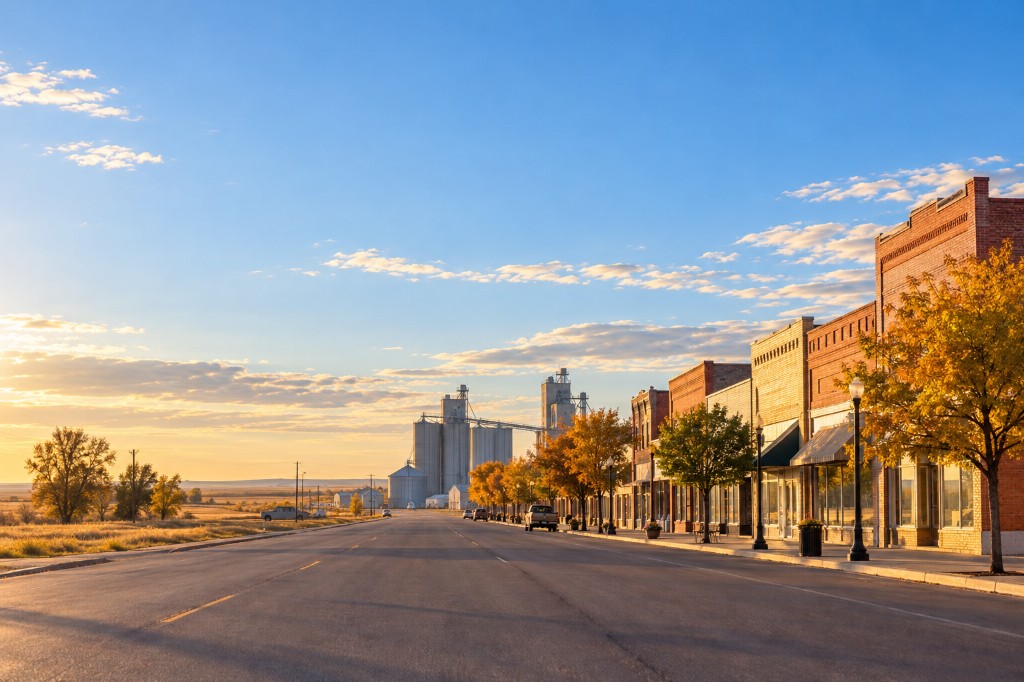
AI-generated editorial illustration. Not a photograph of an actual local business.
The market behind your business
A plains community with a customer area beyond its storefronts
Colorado's tourism office describes Cheyenne Wells as an agricultural community rooted in family farms and ranches, near the Kansas line, with lodging and dining for travelers.[1] These details suggest several possible customer groups, but a seller's records must establish which groups actually buy from the business. A rural address alone does not reveal its commercial reach.
If you plan to sell your business in Cheyenne Wells, map the territory you already serve. Separate customers in town from those reached through deliveries, service visits or telephone orders. Show completed transactions by area without publishing identifying customer information in an introductory presentation. A purchaser needs evidence of the company's existing reach before considering possible expansion.
An illustrative repair operator might group several appointments along one route. Another may return to town for a part between jobs. The invoices could look similar while the labor hours, fuel and completion times differ considerably. Explaining those differences gives a buyer information that an annual sales total cannot provide.
The same principle applies to a shop supplying rural customers. Its value proposition may include holding particular items so customers can avoid an additional trip. Explain that offer through actual product movement and service records. The company's contribution becomes clearer when the seller connects local buying patterns to the work and stock supporting them.
Local context. Practical implications.
Regional industry does not define every company's service territory
The state's Central Plains profile covers Elbert, Lincoln, Kit Carson and Cheyenne counties. It identifies agriculture, transportation, engineering, health and energy among regional industry clusters.[2] That is a four-county description. It does not establish that a particular Cheyenne Wells company supplies every industry or reaches every part of the region.
A seller should draw its own commercial map. Identify regular delivery areas, occasional assignments and locations where work has been declined because it was impractical. Where records permit, connect each area with sales, travel time and retained earnings. An address list becomes more useful when the purchaser can see how the business serves it economically.
Keep different activities distinct. Counter sales, scheduled deliveries and urgent field visits may use the same stock but incur different costs. Show how staff allocate time and how the company records travel or additional work. A purchaser needs to understand the actual model rather than assume that every additional mile generates the same return.
The owner's judgment may be an important part of that model. Deciding which parts to carry, which visits to combine and when to obtain customer authorization can affect results. Document those decisions with examples from ordinary work. Soften sale talk to staged disclosure — not “Proven Success,” a global-network slogan, or an unverifiable Cheyenne Wells street office.

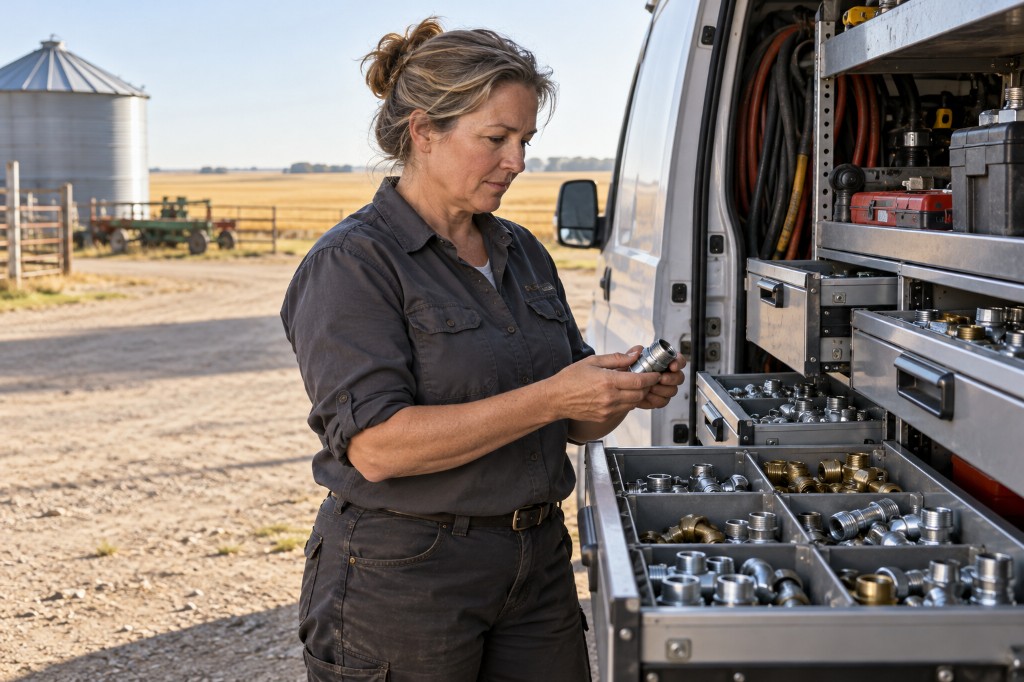
AI-generated editorial illustration. Not a photograph of an actual local business.
A different sale story for every company
Our industry expertise in Cheyenne Wells
Agriculture, energy-adjacent support, Main Street commerce, logistics-facing repair, and professional services each need different evidence — qualitative preparation, not hard deal tallies.
Agriculture & agribusiness
A seller serving agricultural customers should explain the products and assignments its own records support. Separate stocked items from special orders, and identify customer-owned equipment held for work. Show whether a service visit normally includes diagnosis, repair or a later return with parts. See manufacturing and retail.
Energy & natural resources support
Regional energy and resources appear in the four-county profile. Your file still needs completed work, travel and stock for the customers you actually invoice — not a cluster label as private revenue. See construction and plumbing.
Main Street & small business
A retailer should connect its assortment with actual purchases by residents and customers coming into town. Explain replenishment, special orders and items kept available despite infrequent sales. See retail, coffee shop, and convenience store.
Logistics & field repair
A repair company's presentation should distinguish work at its premises from work elsewhere. Explain dispatch, tools carried, staff capabilities and arrangements for collecting additional components. See auto repair, trucking, and HVAC.
Professional services
A service firm should explain how it works with customers across its actual territory. Connect fees with time and resources, and show which responsibilities belong to employees versus the seller's judgment. See insurance agency, accounting firms, and consulting.
Valuation & exit prep
Soften valuation talk to supported earnings after travel, stock and the work between jobs — not a plains cluster headline or a planned highway milepost. See business valuations and exit planning.
The ownership transition
A practical path from readiness to closing
Soft process steps — transfer route knowledge; no invented close counts or franchise sales-plan branding.
Understand the business
Name which territory produces paid work, what stock and vehicles support it, and the owner decisions a successor must learn.
Prepare the presentation
Organize job records, delivery logs and financial reports around the same periods, including travel and work between invoices.
Confidential marketing
Screen outreach and stage disclosures so a distinctive route or specialized product is not identified on day one.
Due diligence
Test routes, stock and open assignments against company evidence — not a four-county industry list or a planned US 385 sheet.
Closing and transition
Hand over open work, special orders, customer property and dispatch judgment with a clear endpoint for seller support.
Use the sale-prep roadmap and due diligence guides. M&A advisory fits when the company and buyer require that level of engagement.
Local market perspective
Treat a road plan as a plan — not a completed benefit
CDOT's February 2026 ten-year-plan fact sheets identify a planned US 385 pavement and structure project south of Cheyenne Wells, between mileposts 141 and 149.7.[3] The document labels the project planned. It should not be described as completed access improvements or used to assert that a private business already benefits from construction.
For a seller, this is a reason to distinguish current operating evidence from future infrastructure context. Explain the routes the company presently uses and any actual delays or additional trips documented in its records. A purchaser can then evaluate the existing service model without relying on an assumed road outcome.
Before you sell your business in Cheyenne Wells, Bridge Point Advisors also serves Burlington, Lamar, Limon, Sterling, and Fort Morgan — each underwritten on its own records, without a claimed Cheyenne Wells street office.
What a clearer sale file usually includes
Cheyenne Wells, CO and surrounding areas
Providing local expertise
Nearby markets we also serve
Burlington, Colorado
Kit Carson County — not a Cheyenne County courthouse Tuesday. Compare only on each company's own records.
Lamar, Colorado
Prowers desk — not this plains seat. Underwrite each file separately.
Limon, Colorado
Lincoln County — cheaper Lincoln rent is the wrong ask for Cheyenne Wells.
Sterling, Colorado
Logan County neighbor on the eastern plains — still its own clerk and wage story.
Fort Morgan, Colorado
Morgan County — not a Cheyenne County route overlay. Keep comps on company evidence.

Ready to take the next step in your business journey?
Bring recent accounts, actual service-area records and examples showing the resources behind completed work. Include vehicle and premises stock, staff duties and commitments that remain open. Contact Bridge Point Advisors to discuss selling your business in Cheyenne Wells, Colorado — call (352) 515-0226.
Or call (352) 515-0226
Questions from local owners
Frequently asked questions
About selling a business in Cheyenne Wells, Colorado
Does a broad service area automatically increase value in Cheyenne Wells?
Explain the company's actual paid work and the costs of reaching it. A larger territory can involve additional time, vehicles or stock. A purchaser needs supported earnings and practical operating requirements rather than an assumption that every additional mile creates equivalent value.
Should the presentation include time spent between jobs?
Show the resources required for ordinary service, including travel, loading and additional visits where relevant. Explain how those costs appear in the records. The buyer needs a realistic view of completed work and the staff effort supporting it.
Can planned highway work be described as a current benefit?
Keep the stage and date stated by the source. The CDOT fact sheet identifies planned work south of Cheyenne Wells. Describe actual present operations separately, and avoid attributing sales or efficiency improvements to an infrastructure outcome that has not been established.
What should happen to open rural service assignments?
Prepare a dated schedule of work, stock commitments, customer property and promises. Review responsibilities and financial treatment with advisers and the purchaser. A clear handover should address specific assignments rather than assume that all outstanding obligations resolve automatically at the ownership change.
How are Cheyenne Wells businesses usually valued?
A business valuation should examine supported performance within the company's actual territory, travel and stock model. Show what the enterprise retains after miles, replenishment, labor and owner judgment. Ranges are directional, not a quote, and a four-county plains cluster is not a multiple.
How is confidentiality maintained when selling a Cheyenne Wells business?
A distinctive route, specialized product or description of a particular assignment may identify the company before its name is shared. Begin with supported financial patterns and operating requirements. More detailed customer, employee and supplier records follow through an agreed process with an NDA. Stage visits around ordinary work so staff and neighbors are not alerted early.
How should Cheyenne Wells compare with Burlington, Lamar, or Limon?
Compare only on each company's own records. Burlington is Kit Carson County, Lamar is Prowers, and Limon is Lincoln — none of those clerks is Cheyenne County. A leftover multiple from a neighboring plains town will not stand in for paid territory, stock and travel costs on this file.

We're here to help you achieve your business goals in Cheyenne Wells
Start with your goals, your recent results, and the company you are ready to transfer. Bridge Point Advisors — call (352) 515-0226. No street address is claimed for Bridge Point in Cheyenne Wells.
Or call (352) 515-0226
Local research and sources
[1] Colorado Tourism Office, Cheyenne Wells community profile; agricultural roots, Kansas-border setting, lodging and dining context; accessed October 24, 2026. Source
[2] Colorado Office of Economic Development and International Trade, Central Plains Region; four-county scope and industry clusters; accessed October 24, 2026. Source
[3] Colorado Department of Transportation, February 2026 ten-year-plan fact sheets, page 201, US 385 south of Cheyenne Wells; planned status and project limits; reviewed October 24, 2026. Source