

Home / Locations / Geneseo, New York
Your business. Your next chapter.
Business Broker in
Geneseo, New York
Show the company a successor would actually operate
A business broker in Geneseo needs a clear account of the company behind its familiar storefront or service name. An owner considering a sale can begin with customers, earnings, equipment and the decisions handled personally. Bridge Point Advisors welcomes discussion of your objectives and the records available to explain those matters. A buyer needs to understand both the ordinary routine and the exceptions that interrupt it. Useful preparation turns practical knowledge into evidence another operator can examine before considering proposed improvements or the responsibilities involved in a change of ownership. Bridge Point Advisors can help organize those facts around your selling goals — without inventing a Geneseo street office.
Or call (352) 515-0226
Livingston County — campus relationships and village service trade kept separate
Bridge Point Advisors for Geneseo owners — without a claimed local street office
Bridge Point Advisors helps Geneseo and surrounding owners present their companies clearly — without treating a civic caption, undated directory listing, or leftover peer-metro multiple as twelve months of private earnings. Call (352) 515-0226. Write New York on page one — this is Geneseo, New York, not Geneseo, Illinois. Soften sale talk — no Proven Track Record slogans or Key Market Stats widgets. We work nationally from Spring Hill.
Bridge Point Advisors
Geneseo, NY and surrounding areas. We work nationally from Spring Hill and do not list a fake Geneseo street office or unverifiable local hours.

AI-generated editorial illustration. Not a photograph of an actual local business.
The market behind your business
Define the relationships behind campus and community activity
SUNY Geneseo identifies its campus in the historic Village of Geneseo and describes itself as a public college.[1] An owner preparing to sell a business in Geneseo should distinguish institutional purchasing from orders by students, employees or independent organizations. Campus activity is context, while the company’s own records establish its customer. Explain authority, acceptance and settlement for material work so a buyer can assess the relationship without treating every campus-associated purchase as one public account.
Livingston County lists its Government Center at 6 Court Street and provides directions for public access.[2] That destination should remain distinct from a private seller’s premises and from other local institutions. A company describing relevant trade needs its own purchasing evidence. A county department, contractor and individual visitor may make different decisions. Identify which relationship supports the receipts and explain the resources needed to fulfill it rather than infer account quality from a recognizable public address.
The National Warplane Museum describes its aviation-history and veteran-recognition mission and its roots at Geneseo’s grass runways.[3] This is a separate organization from the college and county offices. A nearby business should explain its own accepted orders rather than assume a museum connection or quantify private visitor trade from the institution’s presence. Public information gives an accurate setting, while company transactions establish revenue, costs and current commitments that may matter to a proposed sale.
An illustrative floral-display workshop checks a brass hinge on an empty wooden box. The box might be company rental stock, a customer’s property or an item reserved for a future order. It represents a practical operating question, not a real Geneseo firm or institutional relationship. A successor needs to locate ownership, the accepted specification and the next action. The object’s appearance alone cannot show whether it is available for use, awaiting repair or already committed to another customer. Soften sale talk — no fake Proven Track Record slogans or an unverifiable Geneseo street office for Bridge Point Advisors. Write New York on page one — this is Geneseo, New York, not Geneseo, Illinois. Compare with Rochester, Canandaigua, Batavia, Warsaw, Geneva only on each company's own files.
Navigating the Geneseo business market
Keep the Geneseo file measurable
Before you sell your business in Geneseo, identify the dates on which your own trading changed. Use sales and cost records to explain the result after the relevant period has occurred.
Working capital is the cash, inventory, deposits, and receivables a normal week needs so the buyer can make payroll. On this file the normal week is a quiet midweek — not a festival Saturday or a single project spike. Use the sale-prep roadmap before marketing begins.
Local context. Practical implications.
Explain preparation and availability alongside receipts
A floral or display business can use substantial resources before delivering a finished order. Purchasing, selection, preparation and customer changes may consume time that does not appear as separate invoice lines. Explain who performs those duties and how pricing covers them. A buyer needs the contribution retained through the complete order, including work the proprietor supplies outside public opening hours. A visually attractive finished arrangement cannot establish how much labor, waste or working capital was required to provide it.
Keep reusable items distinct from consumable stock and customer property. A display box booked for another date may need inspection or repair before it can be made available again. Record condition, reservations and the current instruction. Another operator needs useful availability rather than a general physical count. The illustrative hinge shows why a small unresolved issue can affect a larger commitment, particularly if staff assume that an item on the shelf is ready without consulting its preparation status.
Examine the actual purchaser before assessing concentration. Several deliveries can depend on one organizer, while independent customers at a shared destination can make separate decisions. The college, Government Center and museum are different settings,[1][2][3] but company records establish its own account structure. Explain authorization, acceptance and settlement. A buyer needs the work and administrative effort behind the relationship as well as its receipts before judging the resources required to continue serving it.
Describe Geneseo operating context through completed work, staffing, and commitments rather than leftover peer-metro multiples.
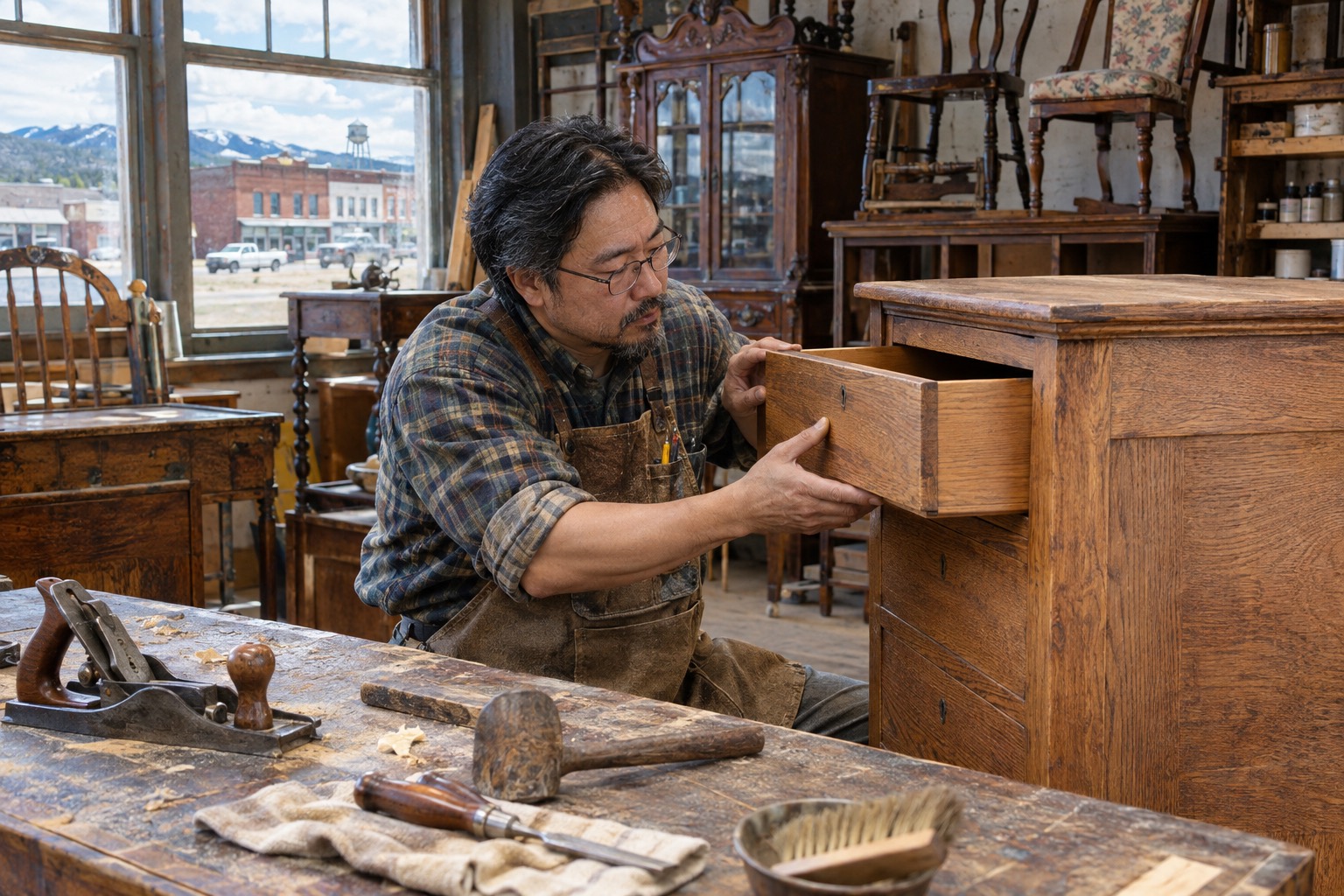
AI-generated editorial illustration. Not a photograph of an actual local business.
A different sale story for every company
Key industries in Geneseo
What owners should prepare before taking a business to market — qualitative preparation, not hard deal tallies.
Floral, display and event-support firms
A seller should connect accepted specifications with purchasing, reusable stock and preparation. Explain changes, delivery, collection and the method for checking items before another use. The illustrative wooden box may be reserved even when physically present. A buyer needs its ownership, condition and availability alongside the staff knowledge needed to prepare it. Keep future customer advances attached to the service remaining, allowing the operating review to distinguish cash collected from work already completed and resources freely available. See event planning.
Campus and organizational suppliers
An owner serving organizations should identify the entity that authorizes each material purchase. SUNY Geneseo’s campus provides context,[1] while orders establish the seller’s own relationship. Explain approval, delivery and payment through supporting records. A buyer needs concentration assessed through purchasing decisions rather than address counts. Registration, past contact and a proposal differ from accepted future work. Keep those stages visible and identify any arrangement whose continuity needs investigation in connection with the contemplated sale. See consulting.
Food and independent hospitality
A hospitality seller should explain receipts through preparation, purchasing, staff cover and ordinary overhead. Distinguish advances for future dates from completed service and record remaining duties. Local institutions can guide timing questions,[1][3] but the company’s own bookings establish demand. A buyer needs ordinary periods as well as unusual events, including cancellations and waste. An account of the full operating cycle supports review more effectively than an assumption that public activity necessarily becomes private sales nearby. See restaurant.
Retail and personal service businesses
A retailer or service shop should explain its range, customer promise and dependence on owner knowledge. Identify reserved goods, returns and unfinished requests alongside available stock. A buyer needs purchasing and staffing considered with reported margins. The Government Center is one public destination,[2] not evidence that every nearby company holds an organizational account. Explain the business’s actual trade through transactions and the practical effort required to maintain the service customers receive. See retail.
Repair, property and regional support
A practical service firm should show accepted scope, equipment and route costs through representative work. Separate routine visits from one-time projects and inquiries. The box-hinge example illustrates why ownership and current approval matter before further work proceeds. A buyer needs the response to delays and changing instructions, not merely a tool list. Identify decisions still concentrated in the seller and the method staff use to obtain suitable expertise or confirmation when a request exceeds ordinary authority. See appliance repair.
Valuation & exit prep
Soften valuation talk to supported earnings after a real manager wage — not a civic caption or leftover peer-metro multiple as twelve months of private profit. See business valuations and the sale-prep roadmap.
The ownership transition
Transfer a full preparation and return cycle
Soft process steps aligned with Bridge Point Advisors practice — not invented close counts or a claimed Geneseo desk.
Understand the business
A practical handover should demonstrate the work a successor will inherit. For the illustrative display business, show intake, specification approval, purchasing, preparation, delivery and return checks. Include a case paused for a missing instruction or an item not ready for reuse. A tour of stock cannot teach all those decisions. Another operator needs to find current information and understand when to seek confirmation or suitable expertise rather than carry a routine beyond its accepted scope.
Prepare the presentation
Define proposed seller support through activities and availability. Training, purchasing instruction and customer introductions serve different purposes. Record answers where they can be used and assign outstanding matters to a responsible person with a next action. Formal terms need appropriate advice. Both parties should be able to distinguish completed pre-transfer work from instruction planned afterward. That practical clarity makes the handover easier to assess than a broad assurance of future assistance that leaves a specific inherited commitment unexplained.
Plan the transition
Match seller assistance to accepted obligations and resources already available in Geneseo.
Due diligence
Due diligence — test lease, licenses, customer concentration, and quiet midweeks against local evidence — not a peer metro leftover.
Closing and transition
Closing and transition — hand over routines, contacts, unfinished work, and a clear endpoint so the buyer can run the next week without the founder.
Use the sale-prep roadmap and due diligence guides. M&A advisory fits when the company and buyer require that level of engagement.
Local market perspective
Assess opportunity without assuming its income
Business brokerage in Geneseo should keep existing performance understandable while considering improvements. A seller may suggest more delivery, a wider range or additional organizational work. Explain any tests completed and the resources required for the next step. A buyer can investigate the option separately. A college, county facility or museum nearby cannot establish that expansion will secure customers, retain a margin or fit within the current company’s staff capacity and premises arrangements.
More rental displays might require storage, transport and inspection time in addition to purchasing. The illustrative box shows why availability must be managed through a complete cycle. An item returned shortly before another booking may need cleaning or repair. Explain how the current business handles that sequence before projecting a larger range. A useful proposal identifies the constraint it addresses and the extra duties created, allowing another operator to examine capacity rather than count possible orders without their associated work.
Review a claimed improvement through consistent periods. A new price can coincide with a different order mix, staffing change or revised opening schedule. Show the relevant costs and keep exceptional transactions visible. Public activity can provide a reference point,[1][3] but cannot isolate the reason for a private company’s result. If the records have limits, explain them. Another operator needs an evidence-based question to investigate rather than a confident account whose connection to the transactions cannot be demonstrated.
A clearer story for a prospective buyer
Geneseo, NY and surrounding areas
Providing local expertise
Nearby markets we also serve
Rochester, New York
Underwrite on its own records.
Canandaigua, New York
Underwrite on its own records.
Batavia, New York
Underwrite on its own records.
Warsaw, New York
Underwrite on its own records.
Geneva, New York
Underwrite on its own records.
Spring Hill, Florida
National desk — where Bridge Point lists from.
Begin with a clear picture of your Geneseo company
Bring Bridge Point Advisors an outline of your business, the outcome you are considering and the records presently available. Explain important customers, your working role and unresolved questions about stock, premises, equipment or future commitments. A starting conversation can identify useful preparation for a fuller presentation while keeping supported performance distinct from proposed opportunity. This gives the discussion a practical foundation in the company and responsibilities another owner would need to understand before evaluating possible terms. Call (352) 515-0226 or contact us.
Or call (352) 515-0226
Questions from local owners
Frequently asked questions
About selling a business in Geneseo, New York
Does every campus-associated purchase count as a college order?
No. SUNY Geneseo identifies its campus,[1] while the company’s own purchasing records establish the customer. A student, employee or independent organizer can buy separately from the institution. Explain authorization, acceptance and payment for material work. A buyer needs the actual decision process before assessing concentration or assuming that a familiar campus destination guarantees continuing organizational purchases after a change of ownership.
How should county-related work be described?
Identify the actual purchasing body and accepted scope. Livingston County lists the Government Center destination,[2] but the seller needs its own orders to establish a relationship. A contractor or individual visitor may purchase independently. Keep history, current commitments and proposals distinct, and explain administration and settlement alongside receipts so another operator can assess the effort required to serve the account.
Does a nearby museum establish visitor sales?
The National Warplane Museum describes its own organization and mission,[3] not the receipts of nearby private firms. A seller should use company transactions to explain trade and avoid an unsupported affiliation. If the records do not identify a customer’s reason for visiting, keep that limitation visible. A buyer can still examine revenue and margins without a speculative allocation of purchases to public attendance.
What should I prepare before an initial discussion?
Start with coherent financial records, a realistic outline of owner duties and a current schedule of important commitments. Distinguish customer property from available stock and connect advances to remaining service. Note missing information openly. Bridge Point Advisors can discuss your objectives using available evidence while further preparation remains, giving the next questions a place without implying that every operational issue or proposed transaction term has already been settled.
How do buyers think about value for a Geneseo, New York company?
Owner-operated shops often price around two to three and a half times seller's discretionary earnings after a real manager wage. With a lead already holding a quiet midweek, a directional band is often two and a half to four and a half times those earnings. Managed companies often price on adjusted EBITDA, commonly about three to six times near a ten million dollar price. Those ranges are directional, not a quote.
Who helps sell a business in Geneseo, New York?
Bridge Point Advisors. Start with a valuation or contact — call (352) 515-0226. The firm works nationally and does not claim a street office in Geneseo.

Ready to discuss selling your business in Geneseo?
Start with your goals, your recent results, and the company you are ready to transfer. Bridge Point Advisors — call (352) 515-0226. No street address is claimed for Bridge Point in Geneseo. Or contact us online. Write New York on page one — this is Geneseo, New York, not Geneseo, Illinois.
Or call (352) 515-0226
Local research and sources
[1] SUNY Geneseo, About. Reviewed November 5, 2026. Source
[2] Livingston County, Government Center. Reviewed November 5, 2026. Source
[3] National Warplane Museum, About. Reviewed November 5, 2026. Source