

Home / Locations / Columbia, Kentucky
Your business. Your next chapter.
Business Broker in
Columbia, Kentucky
Make the different parts of your Columbia business visible
A Columbia company may serve local households, university-related customers and people traveling through south-central Kentucky. Those groups can use the same business for very different reasons. A business broker in Columbia should help explain which relationships produce dependable income and which create occasional peaks. Before approaching buyers, identify the work your company actually performs, the customers it reaches and the resources each activity requires. A clear sale story makes those differences useful. It shows a purchaser how the business earns its money without assuming that every nearby institution, visitor or development opportunity belongs in the company's customer base.
Or call (352) 515-0226
A well-prepared sale starts with clarity
Understand the earnings, protect sensitive information, and prepare for the handover
Boutique process — not “best brokerage” slogans or invented testimonials.
Value the earnings and the work needed to produce them
A business valuation in Columbia should examine the relationship between earnings, customer mix and available capacity. A high-revenue event or commercial order may carry substantial labor, delivery or equipment costs. A smaller recurring activity may be easier to operate. Neither should be judged by sales alone. See the valuation guide.
- Explain owner involvement with the same care — group bookings, purchasing, covering staff absences
- Identify what equipment and stock is used regularly, what supports occasional work and what is no longer part of the operating model
- Keep university proximity, lake access or future industrial development outside automatic value claims
Seller financing, earn-outs, and SBA financing belong only when records support them.
Protect relationships while giving buyers useful evidence
A confidential business sale in Columbia can involve customer details that are recognizable even without names. An unusual event date, a distinctive service package or a specific institutional assignment may identify the company or its client. Share detailed records through an NDA.
- Initial information can explain the business model and customer mix in broad terms
- Use anonymized schedules to demonstrate repeat work and concentration before sharing identifying material
- Plan customer contact carefully — a prospective buyer should not independently approach an organizer, employee or purchasing contact
Connect with your next opportunity
Independent expertise for Columbia and Adair County owners
Bridge Point Advisors helps Columbia owners present food and catering books, student-adjacent retail, event and creative support, vehicle or commercial repair, and household or professional services clearly — including Knifley or Breeding work when the invoices already name those desks — without treating a Lindsey Wilson calendar, a Green River Lake photograph, a Campbellsville leftover, or a commerce-park site plan as a substitute for the company's own trading records. Call (352) 515-0226. No street address is claimed for Bridge Point in Columbia. We work nationally from Spring Hill. This page is Columbia, Kentucky — not Columbia, Tennessee, and not a Taylor annex.
Bridge Point Advisors
Columbia, KY and surrounding areas. We work nationally from Spring Hill and do not list a fake Columbia street office or unverifiable local hours.
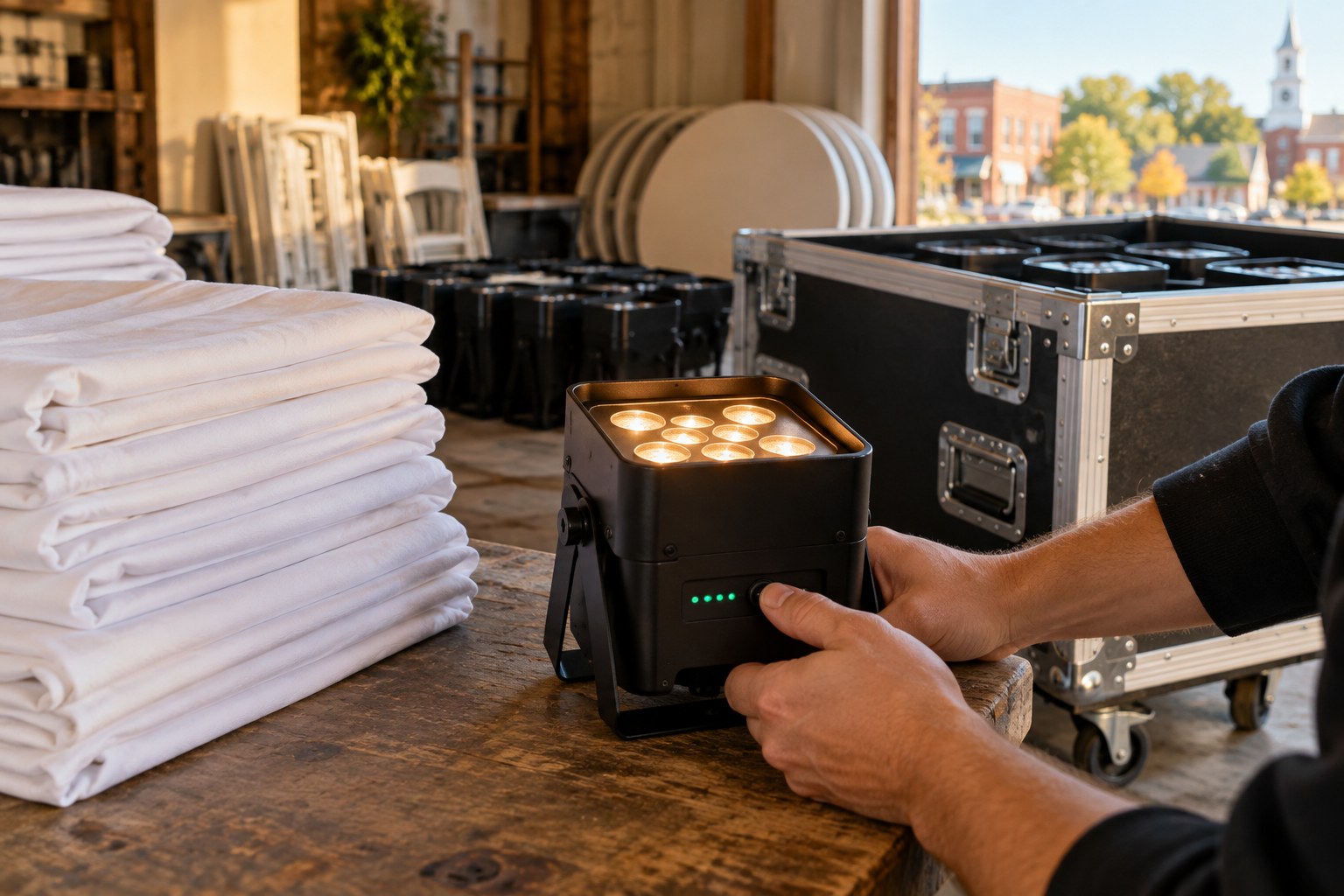
AI-generated editorial illustration. Not a photograph of an actual local business.
The market behind your business
Columbia combines a local center with a university presence
The City of Columbia places the community just off the Cumberland Parkway and identifies Lindsey Wilson University as a local institution. The university describes its main campus on a wooded hilltop in Columbia.[1][2] These are distinct features of the Adair County setting, and they help explain why a business may encounter several customer groups within a relatively compact territory.
An owner planning to sell a business in Columbia should begin with the company's own mix. A restaurant may serve residents throughout the year while accepting occasional group orders. A retailer may sell to students without having a university purchasing relationship. A repair company may work for households, commercial customers and travelers. Each pattern needs evidence suited to the way orders are placed and paid.
Avoid treating all education-related sales as one category. Personal purchases by students or staff are different from purchases authorized by an institution. Family visits, performances and other occasions may create additional activity, but they should be identified from business records rather than inferred from a campus calendar alone. Soften sale talk — no Proven Track Record slogans, fake testimonials, or an unverifiable Adair street office. Nearby pages for Campbellsville, Somerset, Jamestown, and Liberty stay on their own customer geography.
The same care applies to geographic reach. Columbia's location can support travel beyond the city, but the sale presentation should show the actual territory served. Identify delivery destinations, service visits and customer origins where records permit. A buyer can then understand whether the business is primarily local, whether it serves the broader county, or whether it has developed a wider commercial route.
Local context. Practical implications.
Different customers can produce different costs and timing
The city's tourism description places Columbia between Green River Lake and Lake Cumberland.[1] Those are regional recreation destinations, not proof that a particular storefront receives lake traffic. For a business with recreation-related customers, the seller should show how those customers reach the company and what they buy. A location on a travel route is context; actual transactions establish the connection.
This matters because two similar sales totals can require very different effort. A repeat local order collected at the counter may use little delivery time. A group order may require extra preparation, packing and coordination. A customer passing through may need an urgent repair or a product the shop does not normally stock. The buyer needs to understand the cost of serving each group.
Build an operating explanation that follows work through the business. Note how enquiries arrive, how commitments are confirmed and how staff allocate time when requests overlap. For a company with several activities, the ability to coordinate them may be an important part of what the owner has built. The records should also show where the activities support each other and where they compete. A busy special event can bring revenue while disrupting ordinary service. An additional delivery route can increase sales but consume a vehicle and employee for much of the day. Explaining those tradeoffs gives a purchaser a more realistic picture than describing every customer category as an independent growth opportunity. Compare with Glasgow, Burkesville, and Albany only on each company's own files — not by pasting a Barren, Cumberland, or Clinton leftover onto this Adair courthouse week.

AI-generated editorial illustration. Not a photograph of an actual local business.
A different sale story for every company
Key industries in Columbia
What owners should prepare before taking a business to market — qualitative preparation, not hard deal tallies.
Food, catering and group orders
Separate regular counter or table service from advance group commitments. Show how menu choices, quantities, staffing and delivery affect each order. Identify deposits and upcoming obligations without presenting them as completed earnings. If the company serves university-related occasions, distinguish the party paying from the event that generated interest. See Restaurants and Catering.
Retail and student-related services
Show the products and trading periods that matter to residents versus students. Avoid assuming that full university enrollment represents nearby shoppers. Describe actual purchasing patterns, special orders and stock decisions. Explain whether the owner selects merchandise personally or uses a repeatable process staff can follow. See Retail.
Event equipment and local creative services
Treat the calendar as an operating commitment. Review booked dates, equipment availability, preparation time and responsibility for collection. Separate company-owned equipment from hired items used to complete a package. Explain what happens when several customers request the same date. See Event planning and Photography.
Vehicle, repair and commercial support
Identify the mix of planned maintenance, urgent requests and commercial accounts. Columbia's parkway setting provides context, but the seller must establish the source of actual work. Show skills and parts required, how customers approve additional work and how unfinished jobs are tracked. See Auto repair.
Household, property and professional services
Distinguish recurring work from individual projects. Explain how tasks are assigned, checked and billed. Identify customer-specific instructions that must be preserved. Present systems belonging to the company separately from personal reputation. See HVAC, Construction, Cleaning, and Accounting firms.
Valuation & exit prep
Soften valuation talk to supported earnings, customer mix and unfinished commitments — not a lake photograph, a Lindsey Wilson caption, or a leftover Campbellsville multiple. See business valuations and exit planning.
The ownership transition
Transfer the scheduling knowledge as well as the assets
Soft process steps — show judgment that is not obvious from a written sequence; no invented close counts.
Understand the business
A Columbia business with several customer groups needs a handover that explains how the calendar works. The new owner should know which commitments are fixed, which requests remain tentative and which periods require extra preparation. A list of dates is useful only when it includes the responsibilities behind them.
Prepare the presentation
Choose representative examples for training. Walk through a routine local order, a larger advance commitment and a request that required a difficult capacity decision. Show the records, communications and checks used in each case. This teaches the buyer how the operation responds to different situations rather than simply introducing software or handing over files.
Plan the transition
Define the seller's support around those practical needs. Agree on the subjects to cover, the people involved and the limits of availability. If the buyer plans new services or longer hours, keep that planning distinct from training on the established operation. A clear handover gives the purchaser a sound starting point while allowing future decisions to remain their own.
Use the sale-prep roadmap and due diligence guides. M&A advisory fits when the company and buyer require that level of engagement.
Local market perspective
Current developments call for careful interpretation
In October 2026, the Kentucky League of Cities announced an educational partnership with Lindsey Wilson University. The program includes traditional, online and hybrid study formats.[3] This is a current example of the university's wider educational relationships. It should not be translated directly into additional campus foot traffic or a forecast of sales for nearby businesses.
For a seller, that distinction suggests a useful question: which parts of the company's demand are genuinely tied to local attendance, and which arise through broader relationships or remote purchasing? The answer may differ between a restaurant, a printing service and an event supplier. Use order records and customer communication to explain the connection.
Industrial development is another separate part of the local picture. Kentucky's economic development materials identify a certified building pad at Green River Commerce Park in Columbia.[4] A prepared site is development capacity. It is not an occupied new factory, a completed customer contract or revenue already earned by an independent company. A business broker in Columbia should keep that distinction clear for a purchaser.
A clearer story for a prospective buyer
Columbia, KY and surrounding areas
Providing local expertise
Nearby markets we also serve
Campbellsville, Kentucky
Taylor leftover is not this Adair courthouse seat.
Somerset, Kentucky
Pulaski lake clerk stays on its own page.
Jamestown, Kentucky
Russell County desk — not a cheaper Adair twin.
Liberty, Kentucky
Casey County square stays separate from this file.
Glasgow, Kentucky
Barren County weekday is not this Courthouse Square.
Burkesville, Kentucky
Cumberland River town — different clerk and calendar.
Columbia, Tennessee
Shared town name — Maury County is the wrong state.
Spring Hill, Florida
Bridge Point process base — national firm, not Florida-only.

Start with a clear account of your Columbia company
Business brokerage in Columbia should connect the area's university, local and regional setting to the evidence inside your business. Gather the accounts, customer categories and forward commitments before deciding how to present the opportunity. Contact Bridge Point Advisors — call (352) 515-0226 or contact us.
Or call (352) 515-0226
Questions from local owners
Frequently asked questions
About selling a business in Columbia, Kentucky
Should I describe all student purchases as university revenue?
No. Personal spending by students or employees differs from an order placed by the institution. Identify the actual payer and relationship in your internal records. The sale presentation can then explain education-related demand accurately without implying a contract or purchasing approval that the business does not have.
How should I present busy event periods?
Show the sales together with staffing, preparation, delivery and any additional purchases. Compare those periods with ordinary trading. If the event displaced other work, explain that too. A buyer needs to understand the contribution to earnings and the demands on capacity, rather than seeing a busy calendar as proof of profitability.
Does the commerce park increase my business's value?
It provides local development context, but an individual company's value depends on its own evidence. If your business has actual related work, document it. Treat potential future customers or expansion ideas separately. A prepared industrial site should not be described as established income for a business that has no relevant orders.
What if much of the scheduling is in my head?
Begin recording decisions and commitments before marketing. Capture the information needed to accept work, allocate equipment and prepare staff. Use real examples to explain your choices. This can reveal missing records and make a handover more practical, while helping a buyer understand the amount of coordination currently performed by the owner.
Is this Columbia, Kentucky the same listing as Campbellsville or Columbia, Tennessee?
No. This page is Columbia in Adair County — Courthouse Square, Lindsey Wilson context, and lake-route geography as setting only. It is not leftover Taylor Campbellsville and it is not a Maury County weekday. Call (352) 515-0226 if you are unsure which Columbia file you need.
How is a business valued in Columbia, Kentucky?
A business valuation in Columbia should connect demonstrated earnings with customer mix, available capacity, equipment, and unfinished commitments. University proximity, lake captions, and commerce-park site plans explain the area; they do not set a price. Owner-operated shops often discuss seller's discretionary earnings after a real manager wage. Call (352) 515-0226 to start a formal valuation conversation with Bridge Point Advisors.
How do you keep a Columbia business sale confidential?
Use a staged information plan. Early marketing should describe the opportunity without making a recognizable Adair County company or institutional account immediately identifiable. Share detailed customer lists, employee names, and site access only after screening and an NDA. Agree in advance when employees, key customers, suppliers, and the landlord will be told. Visit /contact or call (352) 515-0226 to start a confidential conversation with Bridge Point Advisors.

Ready to discuss selling your business in Columbia?
Start with your goals, your recent results, and the company you are ready to transfer. Bridge Point Advisors — call (352) 515-0226. No street address is claimed for Bridge Point in Columbia. Or contact us online. The firm works from Spring Hill, Florida. If you meant Columbia, Tennessee or another Columbia, that is a different file.
Or call (352) 515-0226
Local research and sources
[1] City of Columbia — parkway location, university presence and regional lake context; reviewed October 29, 2026. Source
[2] Lindsey Wilson University — Columbia main-campus setting; reviewed October 29, 2026. Source
[3] Kentucky League of Cities — university educational partnership, October 23, 2026. Source
[4] Kentucky Cabinet for Economic Development — Green River Commerce Park prepared industrial site; reviewed October 29, 2026. Acreage figures vary within the page and are not used here. Source