
Home / Locations / Barnesville, Georgia
Your business. Your next chapter.
Business Broker in
Barnesville, Georgia
Make the work behind your Barnesville offering clear
A business broker in Barnesville should help you explain what customers buy, what they pay and how your company delivers the experience they value. Downtown specialty retail, independent dining and services connected with the wider Lamar County community present different selling stories. Preparing your company for review means connecting its distinctive offering with completed transactions and the work behind them. Bridge Point Advisors can help organize that presentation around your objectives — without a claimed Barnesville street office. Begin with a practical account of your products, pricing, staff responsibilities and demonstrated earnings so that another owner can investigate the operation with useful context.
Or call (352) 515-0226
Lamar County seat — Gordon State / Main Street / US-41
Bridge Point Advisors for Barnesville owners
Bridge Point Advisors helps Barnesville and Lamar County owners present antiques and home merchandise, coffee and prepared food, specialty retail, skilled services, and business-facing supply clearly — including Milner or Aldora when the invoices already name those places — without treating a Gordon State Paint the Town Blue caption, a leftover Atlanta south-annex multiple, a Griffin Spalding leftover, or a Macon warehouse slide as a substitute for the company's own files. Call (352) 515-0226. No street address is claimed for Bridge Point in Barnesville.
Bridge Point Advisors
Barnesville, GA and surrounding areas. We work nationally from Spring Hill and do not list a fake Barnesville street office or unverifiable local hours.
A different sale story for every company
Key industries in Barnesville
What owners should prepare before taking a business to market — qualitative preparation, not hard deal tallies.
Antiques and home merchandise
The official shopping directory identifies English's Antiques and Taylor and Main among Main Street examples.[1] Another local operator, The Red Bird Treasures, describes antiques, gifts and furniture, including restored pieces and items suitable for further work.[4] For an independent seller, explain how stock is acquired and prepared. Show ownership, purchase history, condition and any work performed before sale. A varied collection needs a useful stock account, not an assumption that every item has the same turnover. Distinguish items ready to sell from pieces awaiting repair, cleaning or a customer decision, and explain the space and staff effort each category uses. See gift shop and retail.
Coffee and prepared food
Gordon State's August 2026 article identifies The Corner Perk's college-inspired Highlander drink.[3] The tourism dining directory also identifies the Donut Palace on College Drive and Pastime Grill on Main Street.[2] A food-business seller can use its own product range to explain preparation, service and purchasing. Separate a special offer from the everyday menu and identify how staff apply changes. Show completed sales alongside ingredients and operating costs. A buyer should understand what makes the offering recognizable and how another team would reproduce its standard through normal working instructions, rather than depend entirely on the departing owner's memory. See coffee shop and restaurant.
Specialty retail and personal purchases
Explore Barnesville lists Main Street Mercantile and Elements of Style among downtown shopping references.[1] For another specialty retailer, organize the offering by how customers actually shop. Explain stocked ranges, special orders, exchanges and any product-specific preparation. Identify the records that show completed purchases and current commitments. A purchaser should be able to distinguish attractive display merchandise from items that have generated demonstrated sales. Document any offers consistently, including when they apply and how staff record them. See retail and gift shop.
Skilled services and customer adjustments
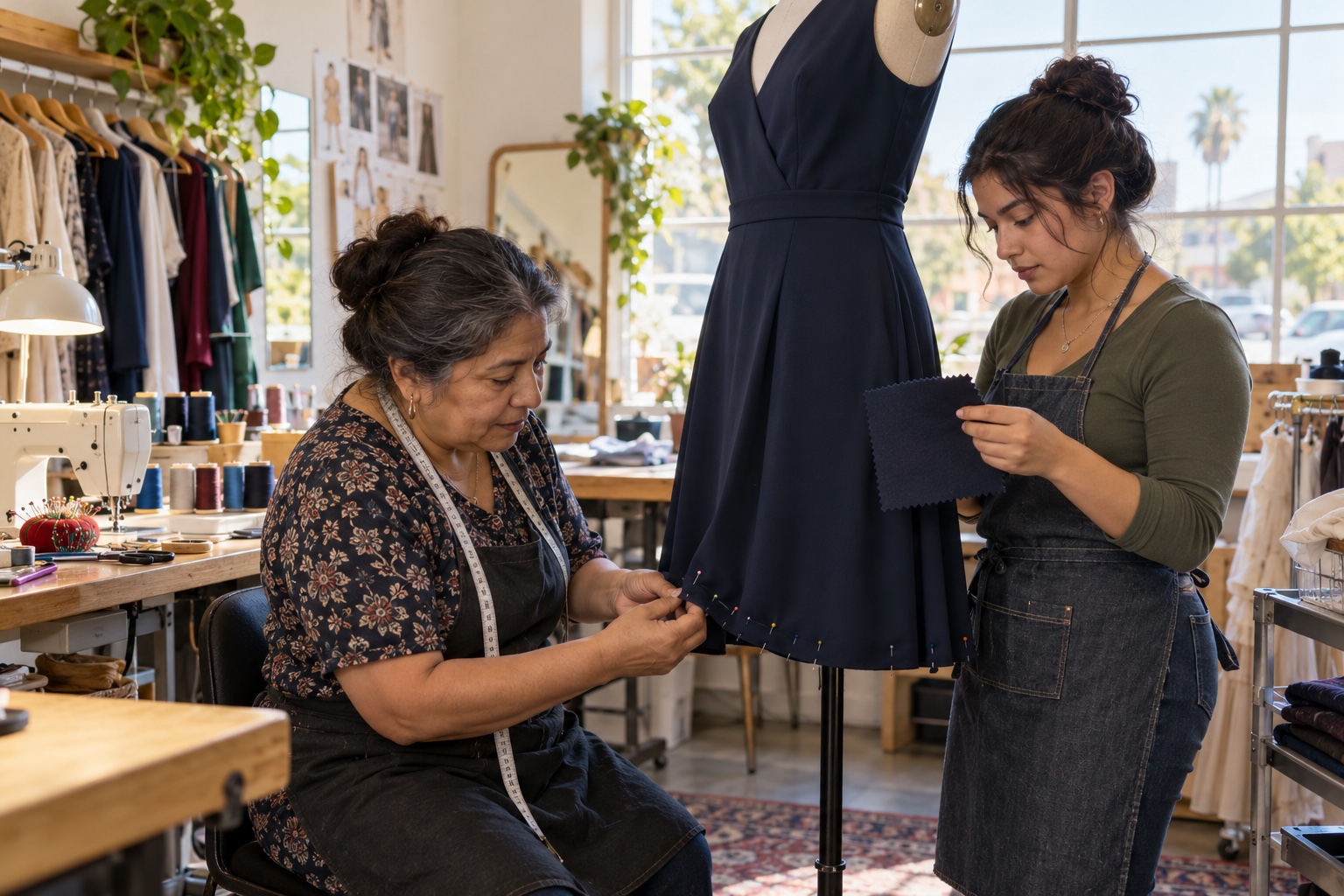
The Chamber's business-development description recognizes small businesses alongside Lamar County's larger employers.[5] For an independent repair, alteration or other skilled-service operation, the selling evidence will differ from a shelf-based shop. Describe the customer's request, agreed work, materials and completion process. Identify how changes are approved and how staff decide when the job is ready. Examples here are hypothetical rather than a claim about a named Barnesville operator. A purchaser needs to understand both the service and the capability supporting it, including responsibilities that currently rely on the owner. See auto repair, hvac, and construction.
Industrial and business-facing supply
The Chamber identifies manufacturing, logistics, energy and wood-related activity among the sectors addressed by county development efforts.[5] These are development categories, not proof that every local seller serves those industries. A business-facing supplier should describe its actual accounts and orders. Explain price quotations, product specifications, delivery arrangements and any preparation before dispatch. Show how the company handles repeat requests and changes in purchased materials. A buyer can investigate established trade through fulfilled work and supporting records, while prospective new customers remain possibilities rather than part of the company's demonstrated earnings. See warehouse and manufacturing.
Valuation & exit prep
Soften valuation talk to supported earnings and the work behind each offering — not a Paint the Town Blue caption, a Rural Zone designation, or a leftover Atlanta / Griffin / Macon multiple as private run rate. See business valuations and exit planning.
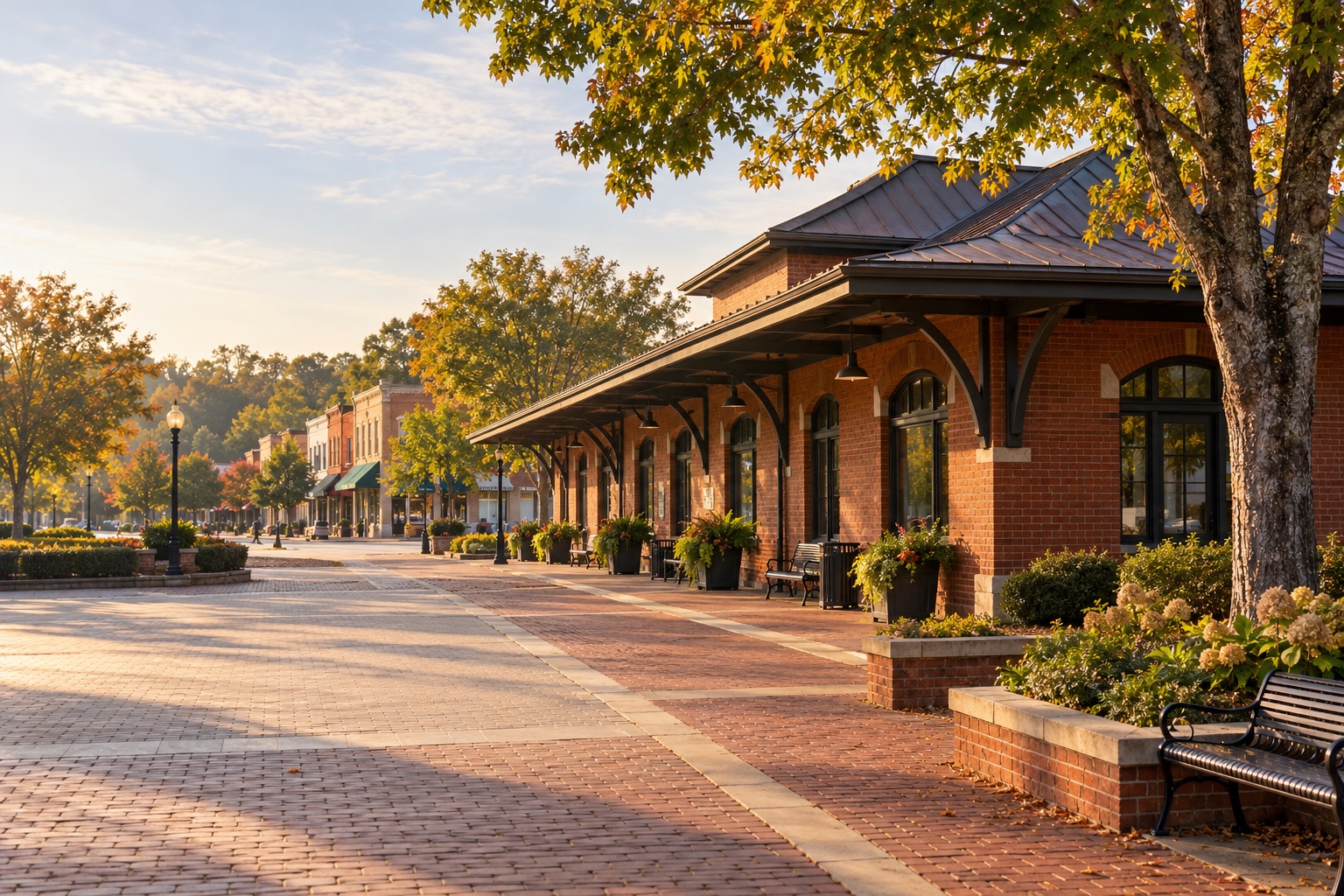
AI-generated editorial illustration. Not a photograph of an actual local business.
The market behind your business
A downtown market with individual reasons to visit
Explore Barnesville's shopping directory identifies antiques, gifts, home-related merchandise and specialty shops around Main Street, Atlanta Street and Zebulon Street.[1] Its food directory separately identifies restaurants on Main Street and College Drive, alongside businesses elsewhere in the surrounding area.[2] The combination suggests several reasons people may visit, but each company has its own customers, prices and operating model.
Gordon State College provides a specific institutional connection. Its August 11, 2026, account of Paint the Town Blue describes participating downtown businesses welcoming the campus community through promotions and discounts. It also identifies a college-inspired drink at The Corner Perk.[3] This is evidence of a particular community initiative, rather than a measure of every merchant's trade.
For an owner preparing to sell a business in Barnesville, the important question is how the company's own offering works. Explain the distinction between regular merchandise, specially prepared products and occasional offers. Identify who buys, how orders arrive and what has actually been completed. A purchaser needs more than a description of downtown's character.
This page concerns Barnesville, Georgia, in Lamar County. Nearby Milner and other county locations should remain distinguishable in a service-area account. Publicly named businesses provide market context; they are not presented as listings for sale or Bridge Point clients. Soften sale talk — no fake Barnesville sold-deal tallies, invented testimonials, or an unverifiable Barnesville street office. Keep this file distinct from leftover Atlanta, Griffin, Thomaston, and Macon unless invoices already support that work.
The ownership transition
Hand over the routines behind the customer promise
Soft process steps — transfer selling practice and unfinished customer work; no invented close counts.
Understand the business
Identify current product and offer references, how exceptions are decided, and which duties still return to the seller. Explain ordinary purchases separately from preparation work and custom adjustments.
Prepare the presentation
Walk through representative transactions: an ordinary sale, an order requiring preparation and an example involving a change or discount. Connect each with purchase and operating records.
Confidential marketing
Stage outreach so a recognizable product combination or downtown frontage is not named on day one. Share detailed records through an [NDA](/nda).
Due diligence
Update unfinished work near the proposed transition. Record materials purchased, work completed, payments received and decisions outstanding. Keep customer-owned goods distinguishable from business stock.
Closing and transition
Agree intended seller assistance through the proposed transaction documents, including the knowledge to be explained and arrangements requiring confirmation.
Use the sale-prep roadmap and due diligence guides. M&A advisory fits when the company and buyer require that level of engagement.
Local context. Practical implications.
Explain the price as well as the product
Two shops can offer similar-looking items while doing very different work before a sale. One may purchase finished goods; another may restore furniture, prepare food or perform skilled adjustments. Describe that work in terms another owner can follow. Identify preparation time, materials, outside purchases and the point at which an item becomes ready for the customer.
Build the explanation around several ordinary transactions. Show the product or service supplied, advertised price, any agreed reduction and the amount collected. Connect the transaction with the appropriate purchase and operating records. Where different systems hold pieces of the story, explain how they fit together rather than leave a purchaser to reconcile conflicting summaries.
A hypothetical Barnesville specialty shop might offer an occasional student discount alongside ordinary customer purchases. The seller should identify which transactions used the offer and how it was administered. That makes the promotion understandable without assuming that a discount created additional profit or that every customer connected with the college received one.
The same discipline helps with distinctive products. A special drink, restored cabinet or custom service may be memorable, but its selling story also includes ingredients, preparation, waste, labor and customer follow-up. Show how the operation handles those responsibilities. A buyer can then investigate the offering as a working business rather than treat a popular idea or attractive photograph as a complete account of its economics. Use the valuation guide and a formal business valuation to keep pricing anchored in documented results — not a Gordon State caption or a US-41 leftover multiple.

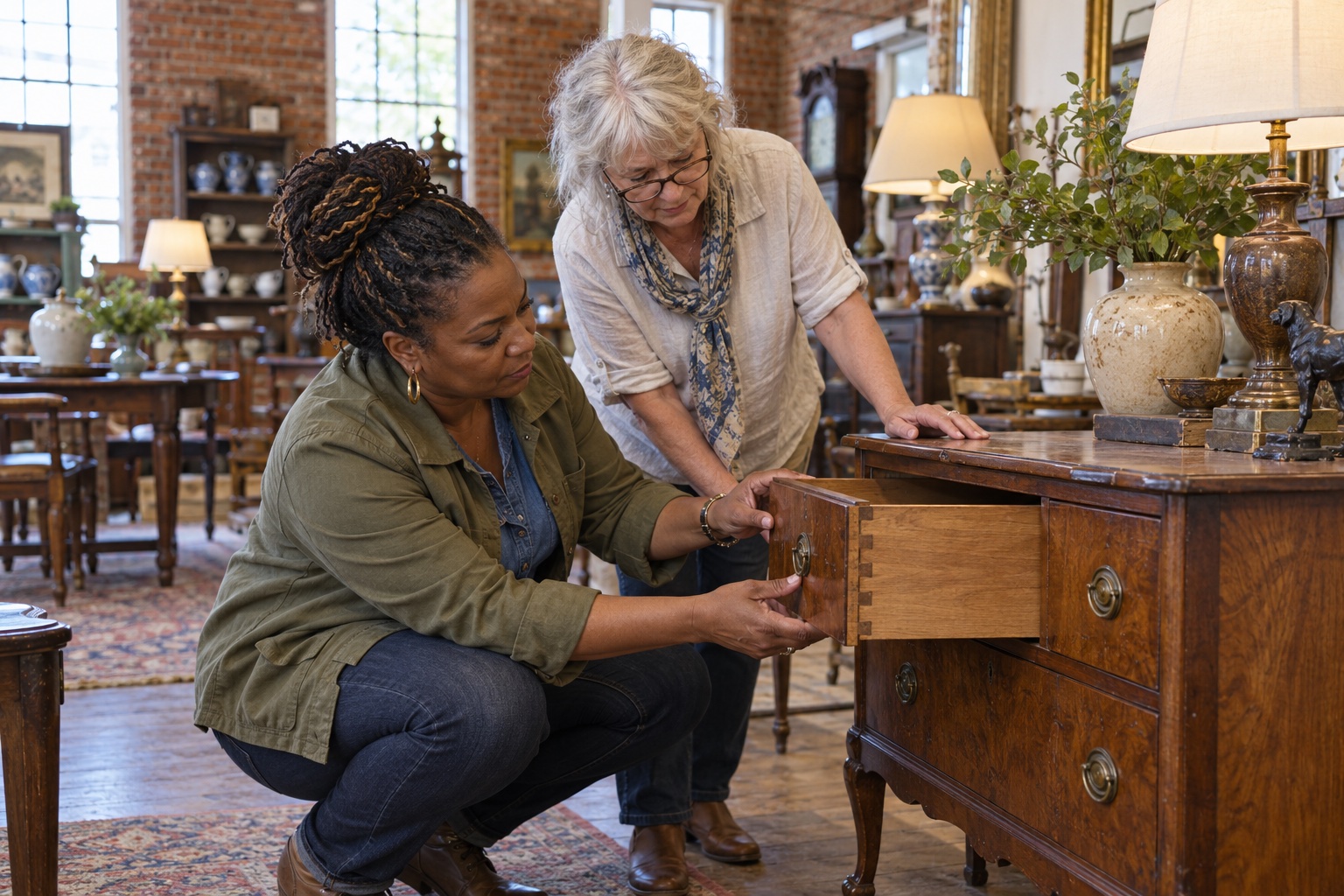
AI-generated editorial illustration. Not a photograph of an actual local business.
Local market perspective
Current promotions and longer-term plans need separate treatment
Gordon State reported Paint the Town Blue on August 11, 2026, as fall classes approached. The article describes participation by downtown businesses and year-round discounts at participating operators for students, faculty and staff.[3] It does not establish a universal offer across Barnesville or the sales response of any individual merchant.
Georgia Tech's Center for Economic Development Research describes a separate Barnesville strategic assessment and successful Rural Zone application. Its case study identifies downtown improvement, infrastructure, housing and small-business development among the planning priorities.[6] The case study is not a dated confirmation that every recommended improvement has been completed. Nor does a designation establish an individual seller's eligibility for a particular benefit.
Business brokerage in Barnesville should explain both kinds of context without mixing them into the financial account. A community promotion can be connected with transactions where the seller has records. A planning priority can help a purchaser understand the setting, while remaining separate from the existing operation. Nearby published pages we also serve: Griffin, Thomaston, Forsyth, Jackson, Macon, Milledgeville, Atlanta, and Spring Hill. Each file stays on its own customer records — without a claimed Barnesville street office.
A clearer story for a prospective buyer
Barnesville, GA and surrounding areas
Providing local expertise
Nearby markets we also serve
Griffin, Georgia
Spalding US-41 peer — not this Lamar Tuesday.
Thomaston, Georgia
Upson seat — keep each clerk on its own files.
Forsyth, Georgia
Monroe County seat — not a Barnesville leftover.
Jackson, Georgia
Butts / Indian Springs — underwrite separately.
Macon, Georgia
Bibb warehouse week — wrong multiple for this square.
Milledgeville, Georgia
Baldwin campus overlay — keep desks separate.
Atlanta, Georgia
Fulton leftover — not a Lamar annex.
Spring Hill, Florida
Firm base — national process, not a Barnesville multiple.
Discuss your Barnesville selling objectives
A business broker in Barnesville can help organize the relationship between your distinctive offering, the prices customers have paid and the resources supporting service. Contact Bridge Point Advisors to discuss selling your business in Barnesville, Georgia — call (352) 515-0226 or request a consultation.
Or call (352) 515-0226
Questions from local owners
Frequently asked questions
About selling a business in Barnesville, Georgia
Does a student promotion establish the value of my company?
No. Explain the promotion through your own completed transactions and costs. Gordon State's published community initiative provides context, while the company's demonstrated results and operations support its individual assessment.
How should I describe antiques awaiting preparation?
Separate them from finished merchandise. Record ownership, purchase history, condition and work remaining. Explain the resources needed before sale so a purchaser can investigate the stock account with suitable professional assistance.
Can I include possible downtown improvements in my presentation?
You can discuss sourced plans with their status clearly identified. Keep recommendations and prospective opportunities separate from completed changes and your business's earnings. A planning document does not establish private sales or a guaranteed benefit.
Is Barnesville the same listing as leftover Atlanta, Griffin, or Macon?
This page is Barnesville in Lamar County — Main Street, Gordon State context, and a tower/depot caption. It is not leftover Fulton, not a Spalding weekday, and not a Bibb warehouse desk. Compare peers only on each company's own records.
Do Milner and Aldora list on this page?
They sit on this Lamar labor pool when the invoices already name them. A Thomaston Street or Main Street shop and a Milner rooftop still get different underwriting. They are not separate published location pages here.
How is a business valued in Barnesville, Georgia?
A business valuation in Barnesville should connect demonstrated earnings with the stock, people, systems and preparation behind each offering. Owner-operated companies are often discussed on seller's discretionary earnings after a real manager wage; managed companies may use adjusted EBITDA. Request a formal valuation conversation and bring recent financials, a normal-week description of your role and a clear list of what is included in the sale. Call (352) 515-0226.
What should I prepare first for a seller discussion?
Gather consistent financial information, current product or service references and examples of ordinary transactions. Add stock and equipment records, the owner's responsibilities and accepted work still outstanding. Call (352) 515-0226 or visit /contact to start a confidential conversation with Bridge Point Advisors.

Ready to discuss selling your business in Barnesville?
Start with your goals, your recent results, and the company you are ready to transfer — with product mix, pricing practice and current commitments visible. Bridge Point Advisors — call (352) 515-0226. No street address is claimed for Bridge Point in Barnesville. Or contact us online.
Or call (352) 515-0226
Local research and sources
[1] Explore Barnesville, official shopping directory; listings are not a live inventory of every operator; accessed October 29, 2026. Source
[2] Explore Barnesville, food and drink directory; Barnesville examples distinguished from Milner and other locations; accessed October 29, 2026. Source
[3] Gordon State College, August 11, 2026, Paint the Town Blue and participating business promotions; community initiative context, not private sales; accessed October 29, 2026. Source
[4] The Red Bird Treasures, own description of merchandise; named example only, not a Bridge Point client or listing; accessed October 29, 2026. Source
[5] Barnesville-Lamar County Chamber, business development and county development categories; development language not private demand; accessed October 29, 2026. Source
[6] Georgia Tech CEDR, Barnesville strategic assessment case study; undated planning account, not a 2026 completion report; accessed October 29, 2026. Source