

Home / Locations / Clay Center, Kansas
Your business. Your next chapter.
Business Broker in
Clay Center, Kansas
Present the reasons customers choose your business
A business broker in Clay Center should understand both the customer who stops to explore the murals and the customer who depends on your company every month. Your business may serve farm operators, local families, healthcare workers, visitors, or several of these groups. Preparing for a sale means showing how those relationships support earnings and how a new owner can continue serving them. Bridge Point Advisors can help organize the company's financial and operating story around that evidence. Start with the practical strengths you have built: useful products, dependable service, knowledgeable staff, and a business that customers know how to find and use.
Or call (352) 515-0226
Clay County seat — U.S. 24 / K-15 / downtown murals
Bridge Point Advisors for Clay Center owners
Bridge Point Advisors helps Clay Center and Clay County owners present agricultural equipment support, downtown gifts and specialty retail, restaurants and gathering places, health-support and appointment-based services, and home, property, and commercial trades clearly — including Clifton, Wakefield, Morganville, or Green when the invoices already name those desks — without treating a mural map, a grain-handling employer caption, or a Manhattan campus multiple as a substitute for the company's own files. Call (352) 515-0226. No street address is claimed for Bridge Point in Clay Center.
Bridge Point Advisors
Clay Center, KS and surrounding areas. We work nationally from Spring Hill and do not list a fake Clay Center street office or unverifiable local hours.

AI-generated editorial illustration. Not a photograph of an actual local business.
The market behind your business
A county-seat market with a recognizable visitor identity
Clay Center sits at the junction of U.S. 24 and K-15 and serves as the Clay County seat. County tourism materials describe the limestone courthouse, community amenities, and downtown shopping as parts of its identity.[1] Those features create several reasons for a person to come into town, but the seller's task is to connect the local setting to the company's own customers. A county appointment, a shopping trip, and a service call create different spending opportunities.
The community's mural program adds a distinctive reason to explore. The tourism organization describes how a single Rotary project developed into a larger collection and provides a map for visitors. Its catalog also includes works in Morganville, so countywide artwork should not all be described as being in Clay Center.[2] For a downtown owner, the practical question is whether mural visitors enter the business, what they buy, and whether that purchase leads to another transaction later.
If you want to sell a business in Clay Center, separate that visitor story from the everyday customer base. A gift shop might sell locally useful items alongside souvenirs. A restaurant may serve regular weekday customers and different weekend guests. A repair company may have little direct connection to tourism at all. Showing those differences helps a buyer evaluate the business on its own terms. Named organizations provide context only, not sale listings or claimed Bridge Point clients. Compare with Manhattan, Concordia, Salina, Junction City, and Belleville only on each company's own records — not as twins of this Clay County seat.
Before you go to market
Prepare the details a successor cannot learn from a drive through town
Before you sell your business in Clay Center, create a clear explanation of customer behavior. For retail, compare purchase frequency and category performance. For services, review repeat jobs and the territory covered. For food, compare ordinary weekdays with busier occasions. Use evidence from the company's systems where available and identify estimates as estimates. Soften claims to supported evidence — not Maximum Value absolutism or a mural-tourism thesis pasted onto a January Tuesday.
Inventory needs a practical review. A gift shop may have seasonal merchandise, consigned items, or products whose design rights belong to another party. An agricultural supplier may carry components that turn slowly but serve valuable repeat customers. A restaurant may have equipment and stock that require different closing procedures. Identify ownership, condition, and intended treatment rather than applying one blanket assumption to everything on the premises.
Review the building arrangement separately from the business. If you lease, gather the relevant documents and discuss continuity requirements with your advisers. If you own, consider whether you want to sell the property, retain it, or evaluate both options. Document the choices customers do not see — how you select stock, price unusual work, schedule around demand, and resolve complaints. Use the sale-prep roadmap before marketing begins.
Local context. Practical implications.
Agriculture, healthcare, and local services shape the economy
Grow Clay County identifies agricultural services and manufacturing among the area's relevant business activities and lists AGI Hutch and Mayrath among major employers.[3] The manufacturer's published material identifies its Clay Center address and grain-handling equipment.[4] This creates a specific agricultural-equipment connection, rather than a generic claim that every local business depends on farming in the same way. A supplier, repair shop, and household retailer may each experience that connection differently.
For a company serving agricultural customers, useful evidence includes the territory covered, the equipment or products supported, and how purchasing changes through the year. A buyer should understand whether the work is urgent repair, planned replacement, routine supply, or a major project. Those categories have different staffing and inventory requirements. Documenting them can reveal strengths that do not appear in a simple annual revenue total, such as repeat service relationships or well-managed stock for time-sensitive needs.
Clay County Medical Center provides another important local institution, with its main hospital on Liberty Street and a wider network of family physician clinics. Its current site describes specialty care, imaging, rehabilitation, and same-day clinic services.[5] For an independent business, distinguish direct institutional sales from purchases by individual employees or patients. A local economic connection is useful context, but the buyer needs to know the actual customer relationship and whether any agreement, referral practice, or professional requirement affects continuity. Soften peer-city paste from Manhattan campus comps and Concordia convent captions unless invoices already support that work.
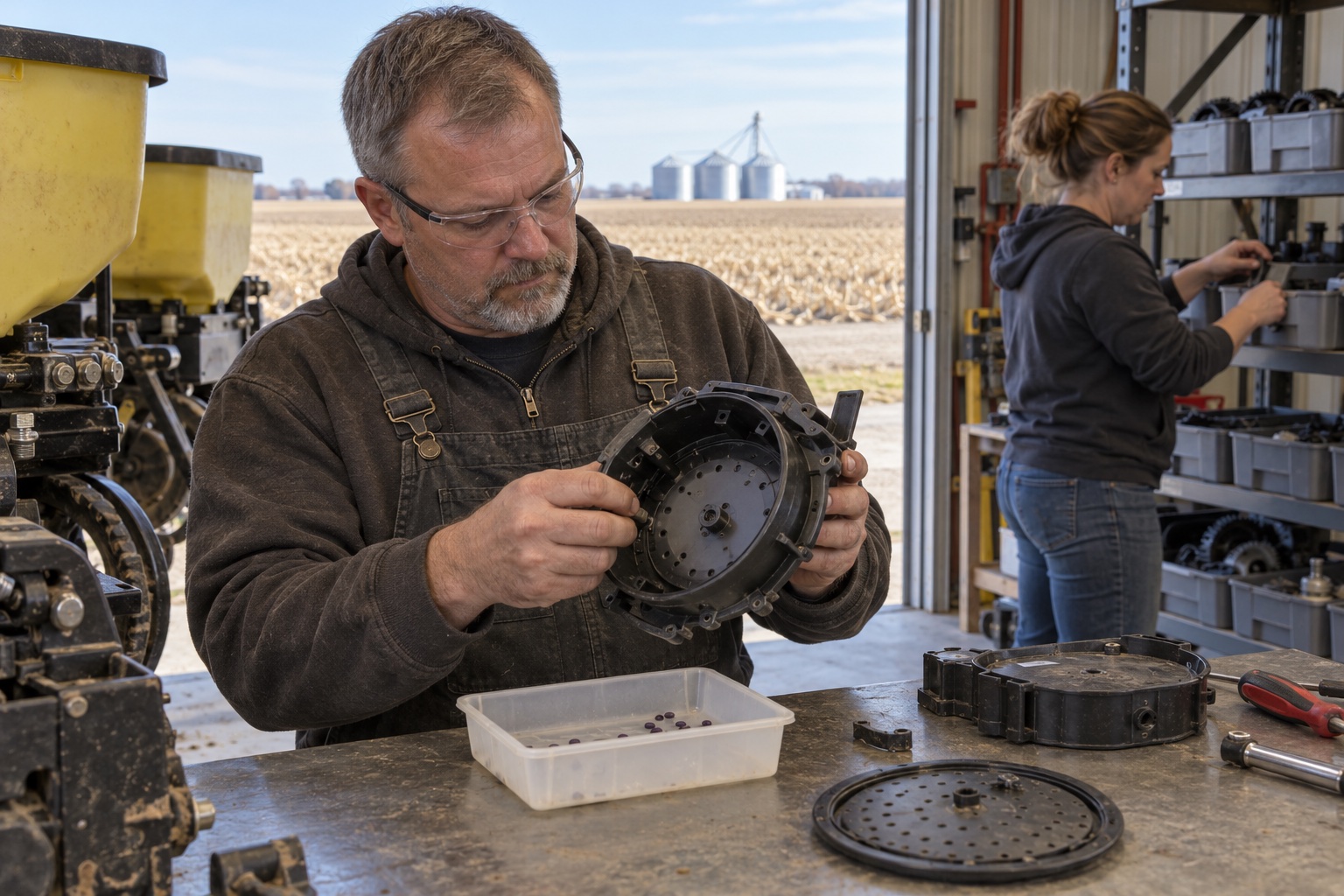
AI-generated editorial illustration. Not a photograph of an actual local business.
A different sale story for every company
Key industries in Clay Center
What owners should prepare before taking a business to market — qualitative preparation, not hard deal tallies or invented close counts.
Agricultural equipment support
An agricultural service company may be valued by customers for its ability to solve a problem when time matters. Document common repairs, response patterns, parts availability, and the employees who can diagnose faults. Explain the difference between stock kept for routine turnover and specialized items held to prevent long delays. A buyer should see how the business balances customer needs with cash tied up on the shelf. See manufacturing, auto repair, and HVAC.
Downtown gifts, apparel, and specialty retail
A retailer serving both residents and visitors needs a clear product story. Show the categories that generate repeat purchases, the margins after markdowns, and the items that primarily sell during particular periods. If locally themed merchandise includes artwork or licensed designs, clarify the rights and supplier arrangements before presenting them as transferable assets. Document buying decisions and reorder habits rather than keeping them entirely in the owner's head. See retail.
Restaurants and gathering places
A food business should distinguish regular meals from event-related activity and visitor purchases. Track the contribution of different dayparts, the practical limits of the kitchen, and staffing needs when tables fill quickly. If the owner provides much of the preparation or management, estimate the work a successor would inherit. Soften claims away from a mural Saturday as run rate. See restaurants and hotels.
Health-support and appointment-based services
A service company may rely on regular appointments, convenience, and customer confidence. Show how the schedule is maintained, how cancellations are handled, and who can cover important tasks. Protect private information and have appropriate advisers review any professional requirements. Where a business has a relationship with a medical institution, describe whether it is contractual, referral-based, or simply geographic. See pharmacies and accounting.
Home, property, and commercial trades
Trade businesses serving Clay Center and surrounding communities — including Clifton when invoices already name that desk — should show where work occurs and what it takes to reach customers. Separate residential repairs, commercial maintenance, and larger improvement jobs. Estimate travel and callback costs honestly. Practical knowledge about materials and suppliers belongs in the transition plan. See construction and HVAC.
Valuation & exit prep
Soften valuation talk to supported earnings, usable stock, and owner work — not a mural map or an agricultural-employer caption as private demand. See business valuations and exit planning.
The ownership transition
Preserve the business's local character through the handover
Soft process steps — transfer service standards and practical relationships; no invented close counts.
Understand the business
Identify the service standards worth preserving — reliable ordering, timely repairs, familiar product availability, or a consistent appointment process — separate from a mural photograph or a grain-handling headline.
Prepare the presentation
Build a customer-and-stock account that shows ownership, purpose, and next action. Connect visitor versus resident trade, seasonal agricultural work, and remaining commitments with the accounts.
Plan the transition
Introduce key suppliers in stages, explain community participation where relevant, and review upcoming commitments. Set specific boundaries for training and follow-up assistance — not an informal promise that personal familiarity transfers automatically.
Use the sale-prep roadmap and due diligence guides. M&A advisory fits when the company and buyer require that level of engagement.
Local market perspective
Local development is most useful when tied to operating evidence
Grow Clay County brings together chamber and economic-development work and describes a focus on existing businesses, workforce preparation, housing, childcare, and community assets.[6] These subjects matter because a business purchase involves people and daily logistics as well as financial statements. A buyer considering relocation may need to understand how the company schedules work and recruits staff. A seller can support that discussion with actual practices without promising that every broader community challenge has been resolved.
The medical center's current website highlights a newer generation of 3D mammography equipment and changes in clinical leadership and services.[5] Those updates show continuing institutional activity. They should not be interpreted as proof of higher revenue for an unrelated business. If your company has gained work, customers, or appointments from a specific development, show the corresponding records. Otherwise, keep the development in the local-context section and let the company's own performance carry the sale case.
The mural program also illustrates the difference between visibility and conversion. A visitor route can bring attention to a district, but each storefront must still offer a reason to enter and buy. Soften peer-city paste from Manhattan, Concordia, Salina, and Junction City. Before you sell your business in Clay Center, Bridge Point Advisors also serves Hiawatha, Belleville, Abilene, Emporia, Phillipsburg, and Larned — each underwritten on its own records, without a claimed Clay Center street office. Clifton folds into this Clay County conversation when the book already shares this labor pool.
A clearer story for a prospective buyer
Clay Center, KS and surrounding areas
Providing local expertise
Nearby markets we also serve
Manhattan, Kansas
Riley campus-and-post desk — compare only on each company's own records.
Concordia, Kansas
Cloud County convent and college week — not this Clay County farm packet.
Salina, Kansas
Saline X-crossroads trade — wrong clerk for this listing.
Junction City, Kansas
Geary / Fort Riley overlay — not a Fifth Street twin.
Belleville, Kansas
Republic County seat — keep clerks and books separate.
Hiawatha, Kansas
Brown County US-36 week — separate from this Republican River file.
Abilene, Kansas
Dickinson County peer — not a twin multiple.
Emporia, Kansas
Lyon County context — keep campus weeks on their own invoices.
Phillipsburg, Kansas
Northwest Kansas peer — not this Clay County seat.

Begin a confidential discussion about your plans
Gather recent financial results, a customer-and-stock account of current work, and the knowledge a successor needs. Contact Bridge Point Advisors to discuss selling your business in Clay Center, Kansas — call (352) 515-0226 or start at /contact.
Or call (352) 515-0226
Questions from local owners
Frequently asked questions
About selling a business in Clay Center, Kansas
Do the murals make a downtown business easier to sell?
They provide a distinctive visitor context, but the business still needs supportable earnings and a workable transition. Show whether visitors buy, what they purchase, and how local customers contribute. Avoid assuming that attention to the district translates directly into profit for every storefront.
How should unusual agricultural parts be valued?
Review their ownership, condition, demand, and role in serving customers. Some older stock may still be useful; other items may be obsolete. Use actual sales and service histories to explain the difference, then establish a clear inventory treatment with the buyer and advisers.
Can I retain my downtown building?
That may be an option, depending on the proposed transaction and a workable occupancy arrangement. Discuss rent, maintenance, term, and other conditions separately from the business price. Buyers need to evaluate the ongoing premises cost before deciding what they can pay for the operation.
What if customers mainly know me personally?
Identify which relationships depend on your presence and which are supported by the staff and service system. Begin transferring knowledge and responsibilities where practical. A planned introduction and training period can help, but the sale materials should describe remaining owner dependence honestly rather than assuming loyalty transfers automatically.
Does Clifton belong on a Clay Center, Kansas sale?
Include Clifton when the invoices already name that desk. It is a fold-in on this Clay County labor pool, not its own listing page. A Clifton rooftop and a Clay Center downtown rent remain different occupancy stories with their own clerks.
Do Manhattan or Concordia multiples belong on a Clay Center file?
Only when the company's own records support that comparison. A Manhattan campus desk or a Concordia Cloud County week is a different underwriting story from a Clay County farm Tuesday and Fifth Street isolate. Write each market on its own invoices before anyone pastes a peer-city multiple.
What should I bring to a first conversation about selling in Clay Center?
Bring recent accounts, a customer-and-stock outline of visitor versus resident trade, and duties you still perform personally. Bridge Point Advisors does not claim a Clay Center street office; start with a valuation or contact at (352) 515-0226.

Ready to discuss selling your business in Clay Center?
Start with your goals, your recent results, and the company you are ready to transfer. Bridge Point Advisors — call (352) 515-0226. No street address is claimed for Bridge Point in Clay Center. Or contact us online. We work from Spring Hill.
Or call (352) 515-0226
Local research and sources
[1] Clay County tourism, Clay Center county-seat location, highways and community setting. Source
[2] Clay County tourism, mural movement and geographic catalog; Morganville works noted separately. Source
[3] Grow Clay County, industries and employer context; undated employee counts not adopted. Source
[4] AGI, grain-handling equipment product material identifying Clay Center; promotional rankings not adopted. Source
[5] Clay County Medical Center, locations, service scope and current updates; no unrelated private revenue inferred. Source
[6] Grow Clay County, business, workforce and community-development priorities. Source